Skip to content
Tank water heaters offer lower upfront costs ($500-$1,000) but require more space and last 10-15 years. Tankless systems cost more initially ($1,500-$3,000) but provide continuous hot water, use 24-34% less energy, and last 20+ years. Your choice depends on budget, space constraints, and hot water demand. Consider your household’s peak usage patterns (2-5 GPM for tankless vs. 40-80 gallon reservoir for tanks). The following comparison will help you make this significant home infrastructure decision.
Key Takeaways
- Tankless systems cost 2-3 times more upfront but save $100-$200 annually and last twice as long as tank heaters.
- Tank heaters store 40-80 gallons while tankless units provide continuous hot water at 2-5 gallons per minute.
- Space requirements differ significantly: tanks need floor space, while tankless units mount on walls and save room.
- Installation complexity varies, with tankless requiring specialized upgrades to gas lines, venting, and electrical systems.
- Your household’s peak hot water demand should determine which system can adequately meet your specific needs.
Understanding the Key Differences Between Tank and Tankless Systems
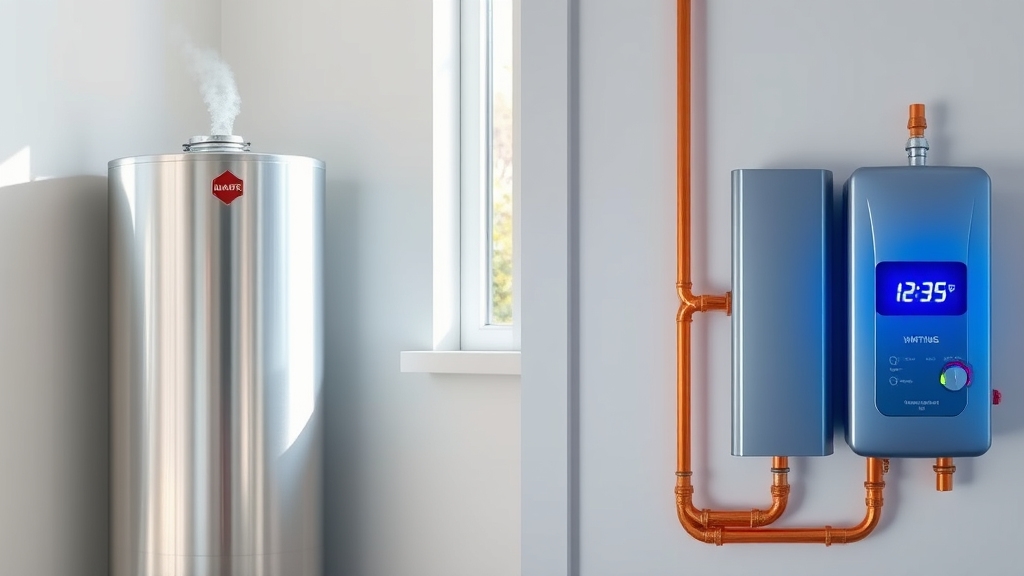
When comparing tank and tankless water heating systems, understanding their fundamental operational differences provides the foundation for making an informed decision.
Tank heaters store 40-80 gallons of pre-heated water in an insulated reservoir, maintaining temperature through periodic reheating cycles. Tankless units, conversely, heat water on demand using high-powered gas burners or electrical elements activated only during usage.
Your installation requirements differ considerably between systems. Tank units need sufficient vertical space and floor support for their sizeable reservoirs.
Tankless systems require smaller wall-mounted footprints but demand upgraded gas lines (¾” versus ½”), enhanced venting, and potentially strengthened electrical circuits (up to 150 amps).
Tank installations typically take 2-3 hours, while tankless setups often require 4-8 hours of professional labor due to these technical modifications.
Initial Cost vs. Long-Term Energy Savings
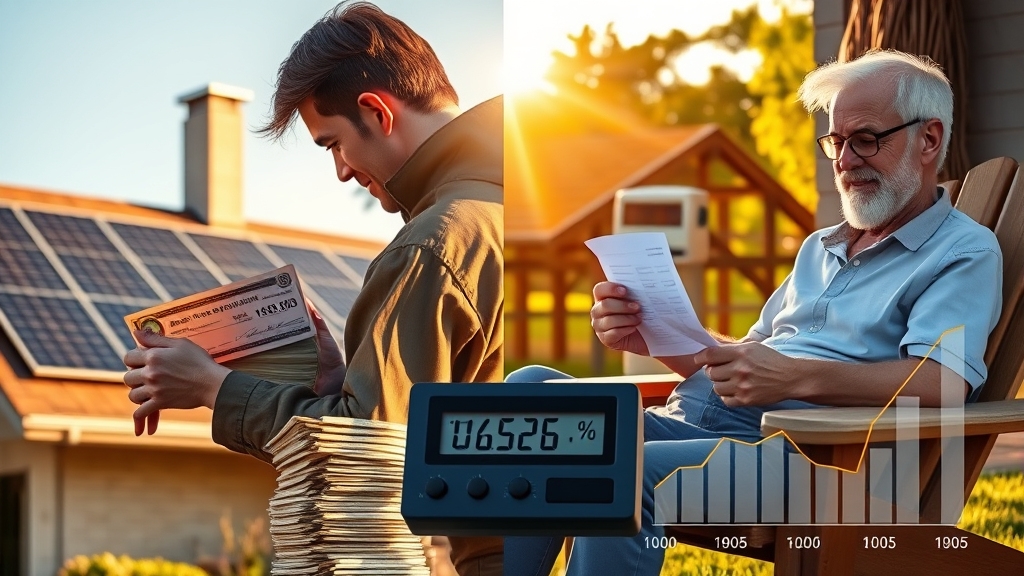
Although the initial investment differs greatly between these systems, understanding the complete financial picture requires analyzing both upfront costs and operational expenses.
Tank heaters typically cost $500-$1,000 installed, while tankless units range from $1,500-$3,000 with proper venting and electrical upgrades.
Expect to invest 2-3 times more upfront for tankless installation compared to conventional tank water heaters.
Your long-term economics improve markedly with tankless systems. They operate 24-34% more efficiently by eliminating standby heat loss, potentially saving $100-$200 annually.
With 20+ year lifespans versus 10-15 for tanks, depreciation costs decrease substantially. Calculate your break-even point by dividing the installation price difference by annual energy savings.
Factor in your usage patterns – households consuming more hot water realize faster returns on tankless investments.
Don’t overlook available utility rebates and tax incentives that can substantially reduce initial costs.
Space Requirements and Installation Considerations
Despite their many similarities, tank and tankless water heaters differ dramatically in their spatial footprints and installation requirements.
Traditional tank units demand significant floor space—typically 3-4 square feet—and vertical clearance of 4-6 feet. You’ll need accessible utility connections and proper ventilation.
Tankless models mount on walls, freeing up valuable floor space. They’re compact (roughly 28″×20″×10″) but require specialized installation.
You’ll need adequate gas lines (often ¾” vs. standard ½” lines), proper venting, and sometimes electrical upgrades for 120V or 240V service.
Installation complexity varies by home infrastructure. Retrofitting tankless systems into older homes may necessitate upgrading gas lines, venting, and electrical systems—potentially doubling installation costs.
Proper placement is essential: tankless units need accessibility for maintenance and sufficient clearance from combustibles.
Water Demand and Performance: Which Meets Your Household Needs?
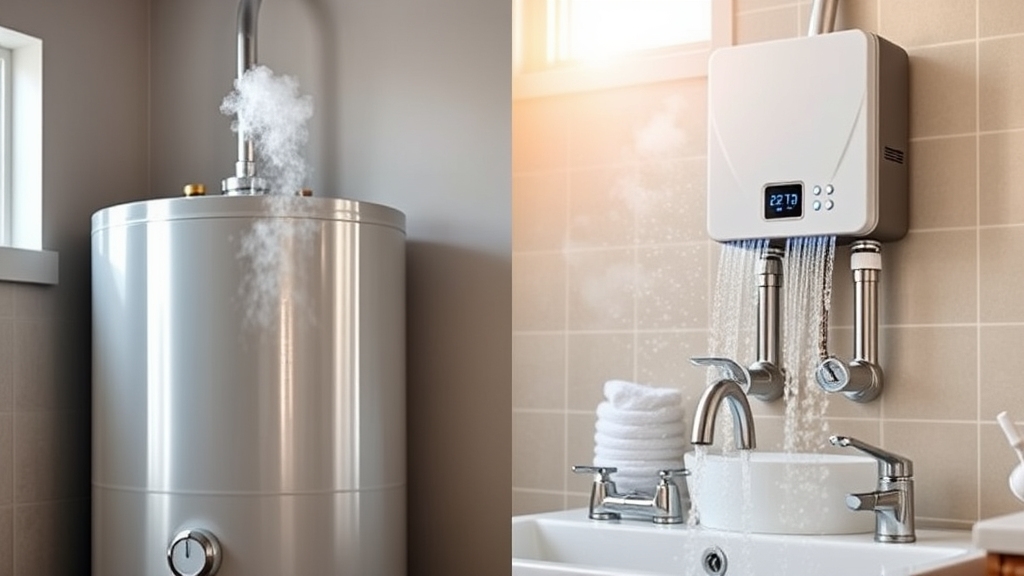
How effectively can each system handle your family’s hot water requirements?
Tank heaters provide a finite reservoir (typically 40-80 gallons) that’s immediately available but can be depleted during heavy usage. Once exhausted, recovery rates average 20-40 gallons per hour, potentially causing wait times.
Tankless systems deliver continuous hot water at rates of 2-5 gallons per minute, depending on groundwater temperature and unit specifications. For simultaneous usage (shower plus dishwasher), you’ll need a unit rated for combined GPM demands or multiple units.
Your decision hinges on peak demand analysis: If you need high volume briefly (multiple simultaneous showers), tanks may suffice. For sustained usage throughout the day, tankless prevents depletion issues.
Calculate your household’s maximum simultaneous hot water requirements in GPM to determine proper sizing for either system.
Lifespan, Maintenance, and Environmental Impact Comparison
Beyond meeting your daily hot water demands, the long-term ownership factors considerably affect your ultimate satisfaction and return on investment.
Tankless systems boast 20+ year lifespans compared to traditional tanks’ 10-12 years, though they require annual descaling to maintain efficiency in hard water regions.
Invest in longevity—tankless systems double traditional tank lifespans but demand annual maintenance in hard water areas.
Consider these critical sustainability metrics:
- Energy consumption – Tankless units eliminate standby heat loss, reducing energy usage by 24-34% in homes using less than 41 gallons daily
- Carbon footprint – Reduced energy consumption translates to fewer emissions over the heater’s operational life
- Material lifecycle – Tankless systems’ longer lifespan means fewer replacements and less landfill waste
When calculating total ownership cost, factor in initial installation complexity, service accessibility, and your climate zone’s impact on performance efficiency.
Frequently Asked Questions
1. What’s the main difference between tank and tankless water heaters?
Tank water heaters store 40–80 gallons of hot water in a reservoir, keeping it ready for use. Tankless systems heat water only when you turn on a faucet, providing endless hot water but requiring sufficient power and flow for multiple simultaneous uses.
2. Which type of water heater is more energy efficient?
Tankless systems are more energy efficient because they eliminate standby heat loss. They typically use 24–34% less energy than traditional tanks, helping reduce monthly utility costs and environmental impact.
3. How long do tank and tankless water heaters last?
Tank models last about 10–15 years, while tankless units can operate for 20 years or more with proper maintenance, including annual descaling in areas with hard water.
4. Are tankless water heaters worth the higher upfront cost?
Yes, in most cases. While they cost two to three times more to install, tankless systems save $100–$200 annually on energy bills and have double the lifespan, making them a smart long-term investment.
5. Do tankless water heaters require special installation?
They do. Tankless systems often need upgraded gas lines, dedicated venting, and sometimes electrical upgrades. Professional installation ensures safety, efficiency, and compliance with building codes.
6. What size system does my household need?
Tank units typically range from 40 to 80 gallons. Tankless systems are sized based on flow rate (2–5 gallons per minute). If you use multiple fixtures at once—such as showers and dishwashers—you’ll need a higher-capacity unit or multiple tankless systems.
7. Can I replace my existing tank water heater with a tankless one?
Yes, but the process can require additional work like venting and gas line modifications. A licensed plumber can evaluate your current setup and handle the conversion safely.
8. Which option is better for small spaces?
Tankless water heaters are ideal for compact areas since they mount on walls and free up floor space. Traditional tanks, in contrast, require several square feet of dedicated area and vertical clearance.
9. Do both types work well in cold climates?
Both systems perform well, but tankless units may need larger capacity or pre-heating in colder climates due to lower incoming water temperatures. A professional can recommend the best model for your region.
10. How can DNA Honest Plumbing help me choose the right water heater?
Our licensed experts assess your home’s size, hot water usage, and energy goals to recommend the most efficient system for your needs. We provide professional installation, repair, and maintenance for both tank and tankless water heaters, ensuring safe and reliable operation.
Final Thoughts
Choosing between a tank and tankless water heater comes down to your home’s unique needs—budget, space, and hot water usage. Tankless systems deliver continuous hot water, save energy, and last longer, while traditional tank models provide lower upfront costs and simpler installation. Evaluating your household’s daily demand, available space, and long-term goals ensures you select the right fit for comfort and efficiency.
For expert guidance and precision installation, trust DNA Honest Plumbing — Sterling Heights’ reliable specialists in water heater installation and water heater repair. Our licensed team will assess your hot water needs, recommend the ideal system, and perform code-compliant installation that maximizes energy efficiency and performance.
Call 586-257-1272 or visit our Contact Page to schedule your consultation today. Whether you’re upgrading to a tankless water heater or replacing a traditional unit, DNA Honest Plumbing delivers honest recommendations, professional craftsmanship, and lasting value — where honesty flows through every pipe.