Understanding Tank Water Heaters
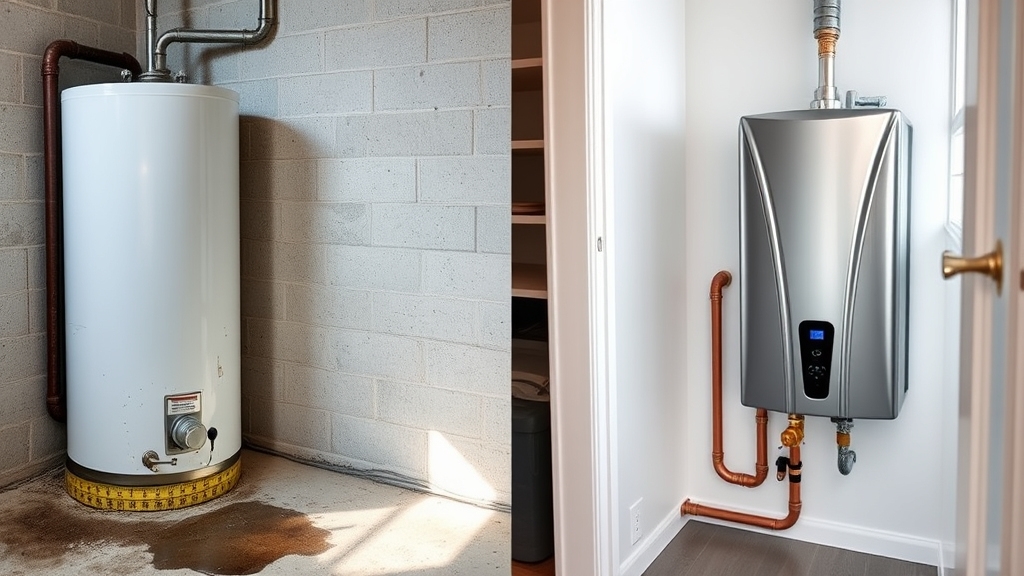
Tank water heaters are traditional systems that store a specific amount of hot water for immediate use. These heaters typically come in various sizes, accommodating different household needs, and are known for their straightforward installation process.
For example, a standard tank water heater can hold anywhere from 20 to 80 gallons of water, making it suitable for families with high hot water demands. However, they may incur higher energy costs due to heat loss from the tank, which can affect long-term savings.
Exploring Tankless Water Heaters
Tankless water heaters, also known as on-demand water heaters, heat water directly without the use of a storage tank. This means you can enjoy a continuous supply of hot water, making them ideal for larger households or homes with multiple bathrooms.
These systems are more energy-efficient, using about 24-34% less energy than traditional tank heaters. While the initial investment is higher, homeowners often find that the long-term savings on energy bills and the extended lifespan of 20 years or more make them a worthwhile choice.
Cost Comparison: Tank vs. Tankless
When considering a new water heater, understanding the cost differences between tank and tankless systems is crucial. Tank water heaters generally have lower upfront costs, ranging from $300 to $1,500, while tankless models can cost between $1,500 and $3,000, including installation.
However, it's important to factor in long-term savings. Tankless heaters may save homeowners up to 30% on energy bills over time, which can offset their higher initial costs. Additionally, the lifespan of tankless systems often justifies the investment, as they can last twice as long as traditional tank heaters.
Energy Efficiency and Environmental Impact
Energy efficiency is a significant factor in choosing between tank and tankless water heaters. Tankless models are designed to heat water only as needed, reducing energy waste and lowering carbon footprints, which is increasingly important for environmentally conscious consumers.
Moreover, many tankless water heaters are eligible for energy efficiency rebates and incentives, further enhancing their appeal. By investing in a tankless system, homeowners not only save on utility bills but also contribute positively to environmental sustainability.
 Skip to content