Skip to content
Choose 24/7 emergency plumbing to stop water fast and cut damage. You’ll get an immediate answer, rapid triage, and a licensed pro dispatched with leak-specific gear. Techs isolate the source, protect fixtures, and use acoustic, thermal, and moisture tools to pinpoint and verify repairs. Early shutoff, extraction, and controlled drying prevent mold, structural issues, and electrical hazards. Expect clear pricing, insurer-ready documentation, and real-time updates. It’s faster, safer, and smarter—and there’s even more that boosts value and peace of mind.
Key Takeaways
- Immediate, 24/7 live dispatch sends a licensed plumber right away, preventing delays and costly water damage.
- Advanced diagnostics rapidly isolate hidden leak sources, enabling accurate, first-visit repairs.
- Fast mitigation protects against mold, structural damage, and electrical hazards with dehumidification and safe power isolation.
- Coordinated clean‑up and restoration streamline drying, repairs, and vendor scheduling to shorten downtime.
- Transparent pricing and insurer‑ready documentation provide clear costs, compliance, and peace of mind.
Immediate Response When Every Minute Counts
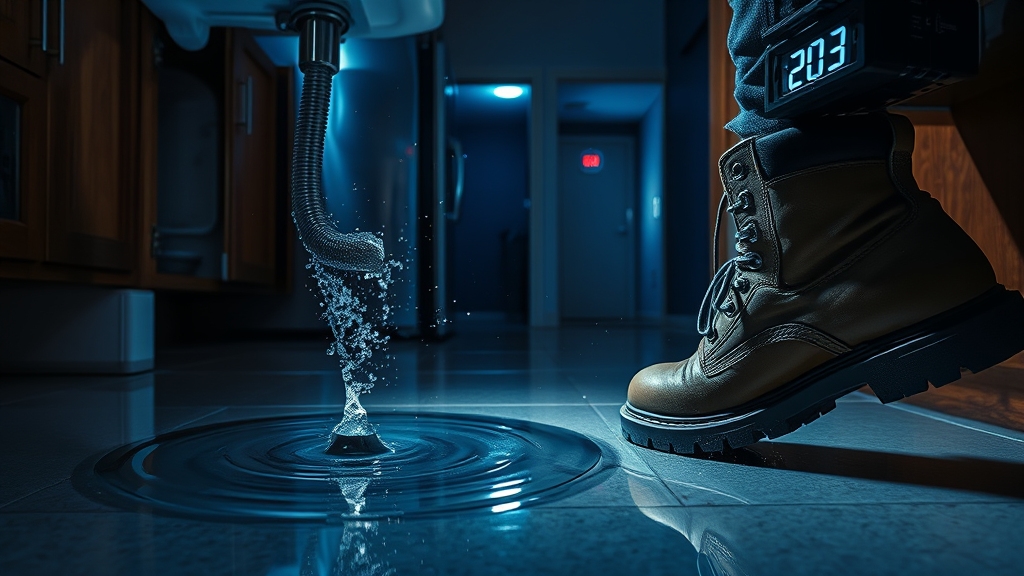
When a pipe bursts at 2 a.m., every second matters, and you need a plumber who can mobilize immediately. You’re not buying convenience; you’re buying time, control, and proven coordination. A true 24/7 operation answers on the first ring, triages the issue in minutes, and dispatches a fully stocked unit with clear ETAs. You get precise communication from intake to on-site diagnosis.
Leverage notification technology to streamline alerts from sensors, concierges, or tenants, and route them to the right technician without delay.
Pair that with resident education so occupants report symptoms accurately—sound of rushing water, pressure drop, hot vs. cold line—reducing misdispatches. Expect technicians to isolate supply, stabilize fixtures, and document findings immediately, keeping you informed and in control at every step.
Preventing Costly Water and Mold Damage
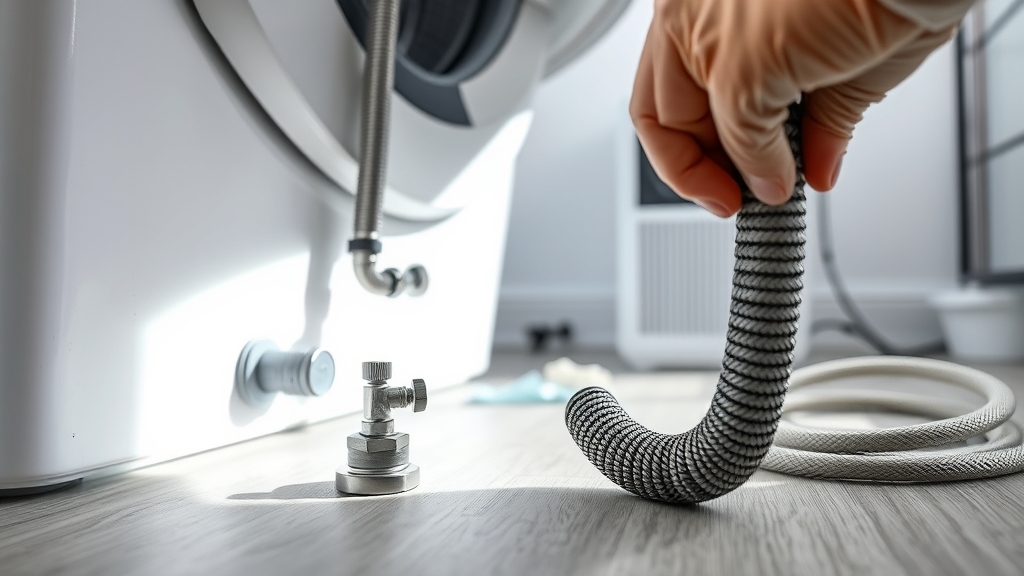
Stopping the spread early saves thousands and prevents mold from taking hold.
You manage moisture aggressively: shut off the water, isolate the circuit, and extract standing pools before they migrate into cavities.
Then you dehumidify to 40–50% RH and sustain airflow to break mold’s growth window within 24–48 hours.
Prioritize sources.
Perform disciplined Appliance Maintenance—inspect hoses, replace brittle supply lines, and add leak sensors with automatic shutoffs.
Schedule Roof Inspections to catch failed flashing, clogged gutters, and punctures that channel water into insulation and framing.
Map moisture with a meter, not guesswork, and document dry standards before rebuilding.
Pull baseboards, drill weep holes, and remove porous materials that won’t dry in time.
Expertise and Equipment Ready for Any Leak
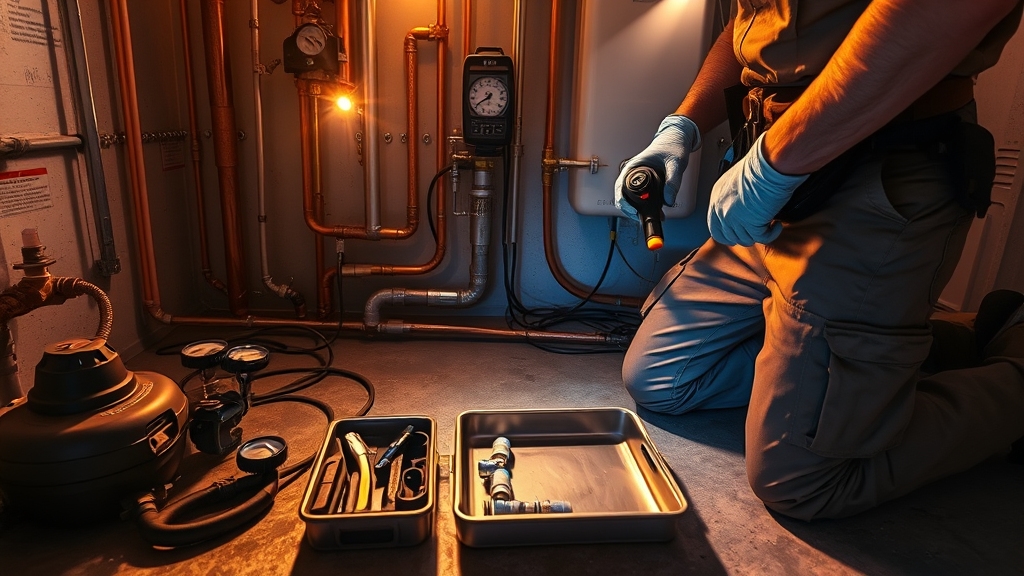
You’ve contained the moisture; now you need pros with the tools and know-how to finish the job. When you call 24/7 specialists, you’re tapping teams whose training certifications go beyond basic licensure.
They deploy advanced diagnostics and repair equipment immediately, eliminating guesswork and accelerating resolution. Their manufacturer partnerships guarantee OEM-grade parts, firmware updates for smart valves, and warranty-safe fixes that hold under pressure.
1) Leak detection: acoustic correlators, thermal imaging, and tracer gas expose hidden failures without tearing up finishes.
2) On-the-spot repairs: press-fit tools, PEX expansion systems, and pro soldering deliver clean, durable joints in minutes.
3) System restoration: calibrated pressure testing and water-quality balancing verify performance after the repair.
With disciplined process, you get precise identification, rapid correction, and verified results every time.
Protecting Structural Integrity and Safety
When you act fast on leaks, you protect your home’s structure from hidden rot and costly water damage.
You also cut the chances of mold and mildew taking hold and compromising indoor air quality.
And by controlling moisture near outlets, appliances, and wiring, you reduce electrical hazards before they escalate.
Preventing Water Damage
Although a small leak can seem minor, acting fast is what protects your home’s structure and safety. Water follows gravity, wicks into framing, and undermines subfloors, so your best defense is rapid response.
You’ll limit swelling, delamination, and corrosion by shutting water off, isolating the source, and calling 24/7 pros who can stabilize pressures, extract water, and document damage for repairs.
To prevent recurrence, integrate exterior and interior controls that keep water moving away from vulnerable assemblies:
1) Elevate performance outside: precise landscaping grading and disciplined gutter maintenance prevent roof runoff from saturating foundations.
2) Harden interiors: install leak sensors, automatic shutoff valves, and braided supply lines; insulate pipes against thermal shock.
3) Manage flow paths: add backflow prevention, maintain clean traps, and verify proper slope on drains and laterals.
Mold and Mildew Risks
Even a brief leak can seed mold and mildew that spread within 24–48 hours, jeopardizing air quality and weakening building materials.
You need rapid intervention because porous substrates—drywall, subfloors, joists—absorb moisture, elevating humidity and driving colonization. Once established, colonies release airborne spores that travel through returns and voids, multiplying the contamination footprint.
Call 24/7 emergency plumbing to isolate the leak source, depressurize lines, and stop moisture loading before thresholds for growth are met.
Technicians can document readings—moisture content, dew point, and relative humidity—to guide targeted drying. By acting early, you reduce health symptoms such as coughing, wheezing, and sinus irritation while preserving structural integrity.
Prompt containment and dehumidification prevent hyphae from infiltrating cellulose, delaminating layers, and degrading fasteners, saving you from invasive remediation.
Electrical Hazard Mitigation
Because water conducts electricity and hides inside walls and floors, a leak can turn your home into a shock and fire hazard fast.
You need decisive electrical hazard mitigation that pairs plumbing response with disciplined electrical controls.
First, kill power to the affected zones; then confirm moisture migration paths before re-energizing.
Emergency plumbers trained in Circuit isolation coordinate with electricians to prevent backfeed and arcing at soaked junctions, appliances, and breakers.
They’ll also verify GFCI installation and test trip thresholds to verify protection holds under damp conditions.
- Map wet circuits with a non-contact voltage tester and moisture meter, then execute targeted Circuit isolation.
- Validate GFCI installation, test monthly, and replace any unit that won’t trip instantly.
- Elevate cords, reroute loads, and document panel labeling for faster, safer shutdowns.
After-Hours Availability Without the Wait
When a leak hits at midnight, you need immediate dispatch times that get a licensed plumber en route now.
You’ll skip the backlog thanks to a streamlined triage process that captures the essentials in minutes.
You get fast confirmation, clear ETAs, and service that starts before the van even arrives.
Immediate Dispatch Times
Typically, the moment you call after hours, we dispatch a licensed plumber right away—no voicemail loops, no waiting until morning.
You get real-time confirmation and an ETA based on live traffic analytics, so you’re not guessing while water spreads.
Our dispatchers align crews through disciplined shift scheduling, ensuring coverage in every zone and eliminating gaps that slow response.
Here’s how immediate dispatch works for you:
1) We match your location with the nearest on-call technician and route them using current road conditions, shaving minutes off travel.
2) We pre-stage vehicles with leak-specific gear, so the first arrival can act decisively the moment they step in.
3) We maintain redundant on-call tiers, guaranteeing a rapid handoff if the first tech is engaged—keeping your downtime to a minimum.
Streamlined Triage Process
Right after we lock in your ETA, our streamlined triage kicks in so you don’t repeat yourself or wait on hold.
You’ll answer targeted questions once; we route that data instantly to the on-call tech and the dispatcher.
Our Workflow Prioritization scores severity—active spray, rising ceiling stain, shutoff status, property type—so the right specialist, tools, and parts move first.
We follow tight Communication Protocols: you get a confirmation timestamp, tech profile, and live map.
If conditions change, you tap a link, update details, and we recalc priority in seconds.
No bottlenecks, no blind spots.
The tech arrives briefed on fixtures, access points, and isolation valves, reducing onsite diagnostics.
That’s how you compress response time and convert chaos into controlled execution.
Clear Diagnostics and Fast Source Isolation
Because every minute counts in a leak emergency, clear diagnostics let you pinpoint the problem fast and isolate the source before damage spreads.
You demand precision, so you leverage acoustic sensors, thermal imaging, and moisture mapping to validate assumptions quickly.
With disciplined Signal Interpretation, you distinguish pipe resonance from background noise, then apply Pattern Recognition to correlate pressure anomalies with flow deviations. You don’t guess—you verify, then shut down only what’s necessary, preserving uptime.
- Establish a baseline: capture static and dynamic pressure, flow, and temperature profiles to detect outliers in seconds.
- Triangulate the leak: merge acoustic, thermal, and pressure data to narrow location to a serviceable segment.
- Isolate with intent: actuate nearest valves, relieve pressure gradually, and confirm stabilization with post-isolation telemetry.
Coordinated Clean-Up and Restoration Support
Even after you’ve contained the leak, the clock still matters, so you coordinate clean-up and restoration as a single, continuous operation. You deploy structured workflows: extract water, stabilize humidity, then remediate materials before rebuilding.
With tight vendor coordination, you stage specialists—water mitigation, drying techs, environmental testers, and finish carpenters—so handoffs are instantaneous, not ad hoc.
You control logistics planning with measurable thresholds: moisture-map baselines, dehumidifier capacity, air-change rates, and drying targets. You prioritize salvageable assemblies, isolate contaminated zones, and sequence deconstruction to protect unaffected areas.
You document chain-of-custody for contents, tag materials for triage, and maintain negative pressure where needed. By orchestrating tasks in parallel and auditing results at each milestone, you compress cycle time, reduce secondary damage, and return spaces to service with confidence.
Transparent Pricing and Insurance-Friendly Documentation
With operations moving in lockstep on-site, you also need clarity on costs and paperwork.
You shouldn’t guess what a midnight repair will run or how to present it to your insurer. Demand itemized estimates before approvals, including labor rates, materials, emergency fees, and projected timelines.
Don’t gamble on midnight repair costs—demand itemized estimates with rates, fees, and timelines upfront.
Precise breakouts let you prioritize scope and prevent scope creep. Insist on warranty clarity, too—coverage terms, exclusions, and transferability belong in writing.
1) Request insurer-ready documentation: loss description, moisture readings, photos, time-stamped actions, and code references that align with common claim forms.
2) Verify billing transparency: line-item invoices that match the initial itemized estimates, plus change-order logs with signatures.
3) Archive service records: permits, test results, and warranty clarity paperwork to streamline audits, subrogation, and future maintenance decisions.
Peace of Mind for Homeowners and Property Managers
Ultimately, 24/7 emergency plumbing gives you confidence that leaks won’t spiral into disasters.
You’re no longer guessing whether a midnight drip will become a ceiling collapse.
You set escalation paths, get rapid diagnostics, and lock in response times that protect value and safety.
That reliability builds Homeowner confidence and manager trust because risks are contained before they multiply.
With on-call pros, you act decisively: isolate water, verify source, and document the fix.
You maintain habitability, avoid code violations, and prevent secondary damage like mold or electrical hazards.
You also safeguard budgets by capping losses and shortening downtime.
Real-time updates, photo evidence, and post-incident reports keep stakeholders aligned.
In short, you gain operational calm—clear protocols, fast execution, and measurable protection for every property you oversee.
Frequently Asked Questions
Do Emergency Plumbers Handle Well Pumps and Septic-Related Leaks?
Yes. You can call emergency plumbers for well pumps and septic-related leaks. They perform Wellhead Repair, pressure testing, and Septic Diagnostics, isolate failures, bypass systems, disinfect contamination risks, and stabilize flows until thorough remediation and regulatory compliance work proceeds.
Can 24/7 Services Work in HOA or Multi-Tenant Buildings?
Yes—most 24/7 services operate effectively in HOA or multi-tenant buildings. You’ll verify HOA access rules, share building contacts, and authorize Tenant coordination. Expect rapid dispatch, common-area protection, documentation for compliance, and post-repair reporting to property managers and boards.
What Certifications Should an Emergency Plumber Carry?
You should verify state licensing, master plumber status, and relevant Trade certifications (backflow, gasfitting, cross-connection). Demand Insurance requirements: general liability, workers’ comp, and bonding. Confirm manufacturer authorizations, OSHA training, and ongoing CEUs for code compliance and advanced diagnostics.
Are Eco-Friendly Leak Detection Methods Available?
Yes—eco-friendly options exist. You leverage Acoustic Sensors to pinpoint turbulence without dyes, and Thermal Cameras to map moisture gradients. Pair them with tracer gas hydrogen/nitrogen blends and smart pressure testing to minimize invasiveness, reduce water waste, and enhance diagnostic precision.
How Are Pets and Indoor-Only Animals Managed During Service?
You secure pets in a separate room or crate for pet containment, label exits, and inform techs of triggers. You schedule quiet windows, deploy white noise, and maintain routines for stress minimization, ensuring safe, efficient, uninterrupted leak remediation.
Final Thoughts
When a leak threatens your home or business, 24/7 emergency plumbing isn’t a luxury—it’s your fastest line of defense. Immediate dispatch, advanced diagnostics, and precise repairs keep damage from spreading and costs from soaring. With DNA Honest Plumbing, you get licensed experts who arrive ready to isolate the source, perform lasting pipe repairs, and coordinate clean-up and restoration safely and efficiently.
Our technicians use acoustic, thermal, and moisture-mapping tools to pinpoint hidden failures, verify results, and provide insurer-ready documentation for your records. You’ll receive clear, itemized pricing, warranty-backed workmanship, and real-time communication from start to finish—no surprises, no stress.
Call 586-257-1272 for 24/7 emergency leak service or visit our Contact Page to request immediate help.
DNA Honest Plumbing—Rapid. Reliable. Real. When leaks strike, we respond fast and fix it right—protecting your home, your budget, and your peace of mind.