Skip to content
Shut off your main water valve immediately to stop flooding, turn off power where water reached outlets, and drain faucets to relieve pressure. Contain leaks with towels, buckets, or a pump and move valuables to dry areas. Use temporary patches or clamps as stopgaps, then call a plumber for large or persistent leaks. Remove soaked porous materials quickly and run fans/dehumidifiers to prevent mold. Keep photos and receipts for claims — continue for detailed steps and prevention tips.
Key Takeaways
- Shut off the home’s main water valve immediately to stop flooding and drain faucets to relieve pressure.
- Turn off electricity in water-affected areas and use a flashlight and insulated gloves when inspecting.
- Contain water with towels, buckets, and a pump; move valuables and elevate furniture to dry locations.
- Apply temporary fixes (rubber patch, hose clamps, epoxy) only as stopgaps and test for leaks after curing.
- Document damage with photos, keep repair receipts, and call a licensed plumber for large, constant, or complex leaks.
Immediate Safety Steps and Shutoff Procedures
If a pipe bursts, act fast and stay calm: shut off your home’s main water valve immediately to stop flooding, then turn off electricity in affected areas if water’s reached outlets or fixtures.
You’ll want to confirm Valve Identification quickly — know whether your shutoff is a gate, ball, or stop valve and turn it fully clockwise or perpendicular as designed.
After cutting water, prioritize Electrical Safety: avoid standing in water near switches, call the utility if you can’t safely access your breaker, and don’t touch wet wiring.
If the main valve’s inaccessible, shut individual fixture valves where possible.
Keep a flashlight and insulated gloves nearby so you can work without risking shock.
Note the valve’s location and label it for future emergencies.
Once immediate hazards are controlled, document conditions for responders.
These steps limit damage and keep you safe while you prepare for the next actions.
Containing the Leak and Protecting Belongings
With water shut off and electrical hazards addressed, focus on stopping further spread and protecting your stuff.
Act quickly: contain the leak with towels, buckets, or plastic sheeting, and move valuables to a dry area.
Remember Furniture Elevation—lift sofas, beds, and wooden pieces onto blocks or folded towels to limit water contact and swelling.
- Visualize the scene: stack books and electronics on a high table, wrap textiles in plastic, and prop furniture legs on blocks to reduce damage.
- Make Salvage Prioritization decisions: grab passports, hard drives, medications, and irreplaceable photos first; then move less critical items.
- Seal off the area with doors closed and dampers or plastic sheeting to prevent water from spreading to other rooms.
Label wet items and take photos for insurance.
Wear gloves and boots while handling soaked belongings. If a major leak persists, call a plumber and your insurer before attempting large-scale moves.
Drying Out and Preventing Mold Growth
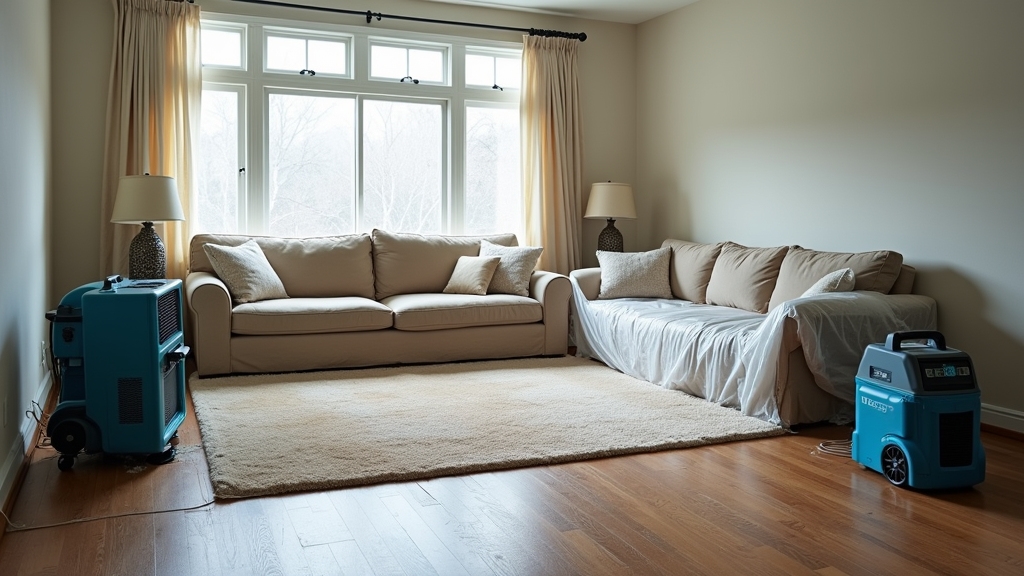
Once you’ve contained the leak and moved valuables, start drying the area immediately to stop mold before it takes hold. You’ll want to remove standing water, open windows if weather allows, and position fans to push moist air out. Pay attention to dehumidifier placement — put it centrally in the affected space, away from walls, with doors closed for best removal of humidity. Check porous materials; wet drywall and insulation often need removal. After surfaces dry, consider antimicrobial treatments on framing and flooring to inhibit spores. Monitor humidity with a hygrometer; aim for under 50% relative humidity until repairs are complete. Keep documenting conditions and photos for insurance. Replace or thoroughly clean HVAC filters and vents to prevent spread. If mold appears despite efforts, call a remediation pro. The table below summarizes quick actions and priorities.
| Action | Target | Notes |
| Remove water | Immediate | Mop/sump pump |
| Fans | Airflow | Point outward |
| Dehumidifier placement | Central | Doors closed |
| Remove porous materials | 24–48 hrs | Drywall/insulation |
| Antimicrobial treatments | After drying | Follow product instructions |
Temporary Repairs and When to Call a Plumber
If a pipe bursts, you can make quick temporary fixes like shutting off the water, wrapping a leaking section with plumber’s tape or a hose clamp, and using a bucket to catch drips.
Watch for signs you should call a plumber right away—large or constant leaks, water spraying under pressure, discolored or foul-smelling water, or loss of water pressure.
If the repair won’t stop the leak or you spot structural damage, call a pro immediately.
Quick Temporary Fixes
When a pipe bursts, you’ll want to act fast to limit water damage and buy time before a pro arrives; temporary fixes like shutting off the water, wrapping a leak with rubber and hose clamps, or using plumber’s tape can stop most small leaks quickly.
First, turn off the main supply and drain faucets.
For pinhole leaks, press an epoxy putty patch onto a dry spot, let it cure, then test.
For larger splits, wrap a rubber patch tightly and secure with hose clamps or heavy tape.
Keep a bucket under drips and mop up pooled water.
Know when a quick fix’s just a stopgap—if flow is heavy or the pipe’s corroded, call a plumber.
Stay calm and work methodically.
- Rubber patch clamped tight
- Epoxy putty pressed smooth
- Bucket catching steady drips
Signs to Call ]]>
A burst pipe can look minor at first, but you should call a plumber the moment you see signs that a temporary repair won’t hold or the situation’s unsafe. If you hear gurgling sounds, spot discolored water, notice persistent leaks, or smell sewage, don’t wait. Temporary fixes like tape or clamps can slow damage but won’t restore proper pressure or prevent mold.
| Signal | Severity | Action |
| Gurgling sounds | High | Shut water, call plumber |
| Discolored water | High | Stop use, report issue |
| Ongoing leak | Medium-High | Contain water, schedule repair |
You’ll want professional assessment if pressure’s unstable, multiple fixtures fail, or structural damage appears. Quick professional help limits costs and hazards.
Documenting Damage for Insurance Claims
After stopping the leak, take clear photos of all damage from multiple angles so your insurer can see the full scope.
Keep every repair receipt and estimate, and note dates and who did the work.
Those records will speed your claim and help you get proper reimbursement.
Take Clear Photos
Grab your phone and start shooting: clear, well-lit photos are the fastest way to prove what happened and how bad the damage is. You’ll want to use lighting techniques to minimize shadows and composition tips to frame each scene so adjust angles, turn on lights, or add a flashlight.
Take both wide shots and close-ups, and include a time reference like a clock or phone lock screen. Label photos immediately so you won’t mix them up.
- Wide shot of the whole room showing water spread, furniture positions, and source pipe.
- Close-up of damaged materials — swollen drywall, warped flooring, rusted fittings.
- Detail of water lines, puddles, and any visible mold or staining for claim clarity.
Keep Repair Receipts
When you hire pros or buy supplies to stop damage, keep every receipt and note what each item or service covered so your insurer can match costs to repairs. You should organize paper and digital copies immediately, label them by date and location, and add brief notes about work done. That helps with warranty tracking, supports tax deductions if eligible, and speeds claims.
| Item/Service | Purpose |
| Plumber invoice | Repair pipe, labor |
| Drying equipment rental | Remove moisture |
| Replacement materials | Pipes, drywall |
| Temporary lodging | If home uninhabitable |
| Misc. supplies | Towels, cleaners |
Keep a checklist tied to receipts, record contractor contact details, and submit grouped documentation to your insurer promptly.
Repairing or Replacing Damaged Pipes and Materials
If the burst has left pipes cracked, corroded, or completely severed, you’ll need to decide quickly whether to repair or replace the damaged sections to stop leaks and prevent future failures.
If pipes are cracked, corroded, or severed, decide quickly whether to repair or replace to stop leaks.
Assess the extent of damage, check material compatibility with existing plumbing (copper, PEX, PVC) and verify proper pipe sizing to maintain pressure and flow.
Small cracks and localized corrosion often suit patching or short replacement; widespread corrosion, multiple joints failing, or mismatched materials mean full replacement is safer.
Consider visualizing the work:
- A short copper splice joined with solder and a clean cut, sealing a single damaged run.
- A replacement PEX loop snaking through a stud bay, fitting snug where the old line was removed.
- A section of PVC removed with clean cuts and solvent-welded fittings, matching diameters and pressure ratings.
When in doubt, consult a licensed plumber—improper repairs can worsen leaks or create code violations.
Preventive Measures to Avoid Future Bursts
After repairing or replacing damaged sections, you’ll want to stop future failures by addressing the root causes: inspect for corrosion, remove incompatible materials, add proper supports and insulation, and correct pressure issues.
Start a schedule of routine inspections to catch small leaks, loose fittings, and early corrosion. Check joints, valves, and visible runs every few months and after extreme weather.
Upgrade or replace old pipes made of prone materials and remove any incompatible connections that accelerate deterioration.
Add pipe insulation to exposed lines in unheated spaces and seal gaps where cold air reaches pipes.
Install support brackets and hangers to prevent sagging and stress at joints.
Monitor system pressure and install regulators or expansion tanks if you see pressure spikes.
Finally, keep clear access to pipes so you can inspect and repair quickly. These targeted steps reduce risk and give you confidence that the same failure won’t repeat.
Frequently Asked Questions
Can a Burst Pipe Cause Electrical Hazards in My Home?
Yes — water from a burst pipe can create electrical hazards. You’ll risk short circuits and grounding issues, which can shock you or start fires. Shut power off, avoid wet areas, and call a professional immediately.
Will My Homeowner’s Insurance Cover Plumbing Negligence?
Usually no — insurers often deny claims under negligence exclusions if you failed to maintain pipes. You should document inspections, repairs and damages thoroughly; satisfying documentation requirements can improve chances when you submit a claim and dispute denials.
Can Frozen Pipes Burst Even if My Heat Is on Low?
Yes — pipes can burst even if your heat’s on low. Cold spots, poor insulation methods, and vulnerable pipe materials (like older copper or plastic) let freezing occur; insulating, warming cabinets, and thawing promptly reduce risk.
How Long Before Mold Becomes a Health Risk After a Leak?
Mold can start harming you within 24–48 hours after a leak; you’ll often see visible growth in that timeframe. You’ll notice worsening air quality, so act fast to dry areas and fix moisture sources.
Should I Shut off Water When Leaving Home for Vacation?
Yes — you should shut off the main valve when leaving for vacation, and isolate appliances too. That prevents leaks, reduces pressure on pipes, and lowers mold and water-damage risk if a burst or appliance failure occurs while you’re away.
Final Thoughts
When a pipe bursts, fast action is the only way to keep damage under control. Shutting off the main water supply, cutting electricity to wet areas, and containing the leak are your first priorities — but true protection comes from following through with proper drying, documentation, and professional repair. Temporary clamps or patches can buy time, but they aren’t long-term solutions, and delaying repairs risks mold, electrical hazards, and additional pipe failures.
For reliable, permanent repairs, DNA Honest Plumbing offers 24/7 emergency response and full-service restoration support. Whether you need urgent burst pipe repair, complete pipe replacement, frozen pipe recovery, or a full diagnostic using camera sewer inspections, our licensed technicians deliver safe, code-compliant solutions. Explore all our emergency and interior plumbing services to strengthen your system and prevent future failures.
Stay prepared, act quickly, and rely on trained professionals to restore your home safely. To schedule immediate emergency service or get help with permanent repairs, contact us directly:
Contact DNA Honest Plumbing.