Skip to content
A true plumbing emergency includes active leaks or flooding, sewage backups, water reaching outlets, toilets overflowing, gas smells near a heater, or no water to the property. Shut off the main water valve, cut power if water nears electricity, open faucets to relieve pressure, and keep people away from sewage. Move valuables, contain water, and call a licensed 24/7 plumber. Minor drips or slow drains can wait. Quick, informed steps protect health, safety, and property—and the next sections explain how.
Emergency Plumbing Essentials: What to Do and When to Call 24/7Key Takeaways
- Active leaks, burst pipes, sewage backups, or no clean water are true emergencies requiring immediate 24/7 plumber attention.
- Shut off the main water valve and electricity if water nears outlets; open faucets to relieve pressure before calling.
- Sewage odors, visible effluent, or toilet overflow that won’t stop pose health risks and need urgent professional remediation.
- Gas smell or water heater malfunction risks scalding and carbon monoxide; call a 24/7 plumber and isolate fuel immediately.
- Minor drips, single slow drains, or routine appliance issues can wait; contain water, shut fixture valves, and schedule regular service.
Signs You’re Facing a True Plumbing Emergency

When water is actively leaking, sewage is backing up, or there’s no safe access to clean water, it qualifies as a true plumbing emergency.
Key emergency signs include water reaching electrical outlets or appliances, toilets overflowing without stopping, and sewer odors or visible effluent indicating a health hazard.
No water to the entire property, especially with vulnerable occupants, also meets the threshold. Urgent leaks that soak ceilings, walls, or flooring demand immediate shutoff and professional help.
Rapidly rising water meter readings when fixtures are off signal hidden failures. Gurgling drains, widespread slow drainage, or discolored, rusty, or cloudy water suggest system compromise.
Presence of mold, warm spots on floors, or hissing near gas water heaters warrants swift 24/7 plumber contact.
When a Burst Pipe Demands Immediate Action
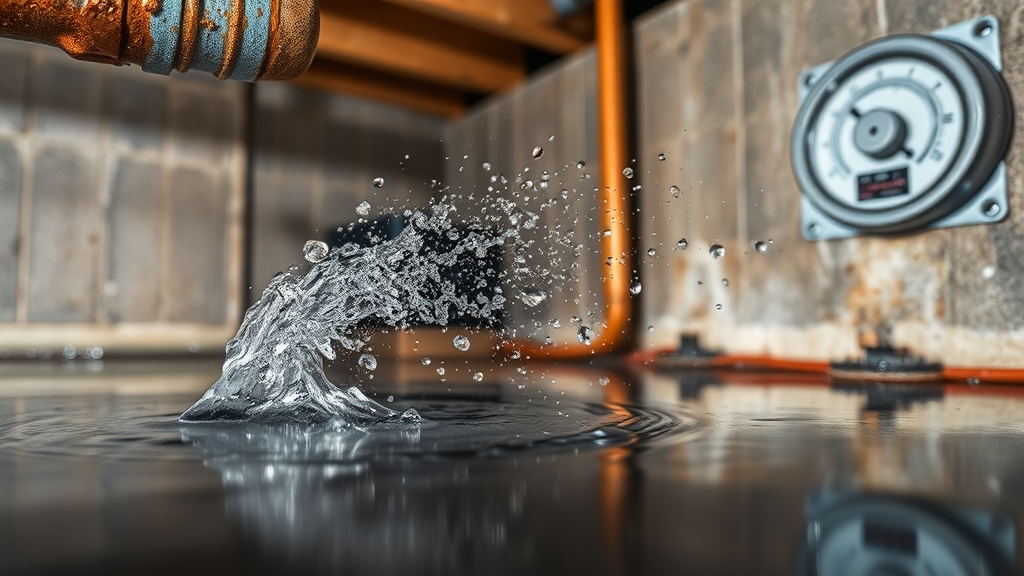
A burst pipe demands instant recognition: hissing or spraying water, sudden pressure loss, bulging walls, or rapid meter movement.
The homeowner should shut off the main water valve, cut power if water nears outlets, and open faucets to relieve pressure.
Immediate containment—towels, buckets, moving valuables, and activating fans—helps limit water damage until a 24/7 plumber arrives.
Signs of Active Rupture
Evidence of an active rupture is unmistakable and demands immediate action. Hallmark signs include visible water spraying or streaming from piping, rapidly spreading ceiling stains, and pooling that returns after cleanup.
Fixtures may sputter as air enters lines, and a sudden pressure drop across multiple taps indicates a major breach. Unexplained sounds—hissing, rushing, or hammering—often accompany active leaks.
Discolored water, debris in flow, or unusually warm spots on floors can signal a hot-water line failure. Walls may bulge, paint may blister, and flooring can cup or lift as water saturates materials.
Electrical risks rise when outlets or appliances are near wet areas. A rising water meter despite closed fixtures further confirms a live rupture requiring immediate professional response.
Immediate Shutoff Steps
Speed-first safety dictates shutting off water and power before damage escalates. In a burst pipe scenario, immediate shutoff is the first line of defense.
Locate the home’s main water valve—typically at the perimeter wall, basement, crawlspace, or near the water meter—and turn it clockwise to close. If the break is on a fixture line, close that fixture’s stop valve to isolate the failure.
Next, cut electrical power to any affected area at the breaker panel to eliminate shock risk. Open cold taps briefly to relieve pressure; then close them. Avoid using gas appliances nearby.
Document valve locations for future reference and confirm all household members know these emergency procedures. After securing systems, contact a licensed 24/7 plumber and describe the shutoff steps already taken.
Preventing Water Damage
When a pipe bursts, containment and quick mitigation limit structural and mold damage. Swift action protects framing, wiring, and finishes while preserving water safety.
Shut off the main supply, open low faucets to drain lines, and cut power to affected circuits. Move valuables, elevate furniture, and deploy towels, buckets, and wet/dry vacs.
Use plastic sheeting to isolate spray and direct flow to drains. Contact a 24/7 plumber and document conditions for insurance. Dehumidify aggressively within 24 hours for effective flood prevention.
- Panic subsides when the main valve turns and silence returns.
- Relief grows as floors stop buckling and walls stay intact.
- Confidence rises seeing clean water routes and safe power.
- Hope returns with swift, expert response.
- Peace follows a dry, restored home.
Sewage Backups and Health Risks You Can’t Ignore
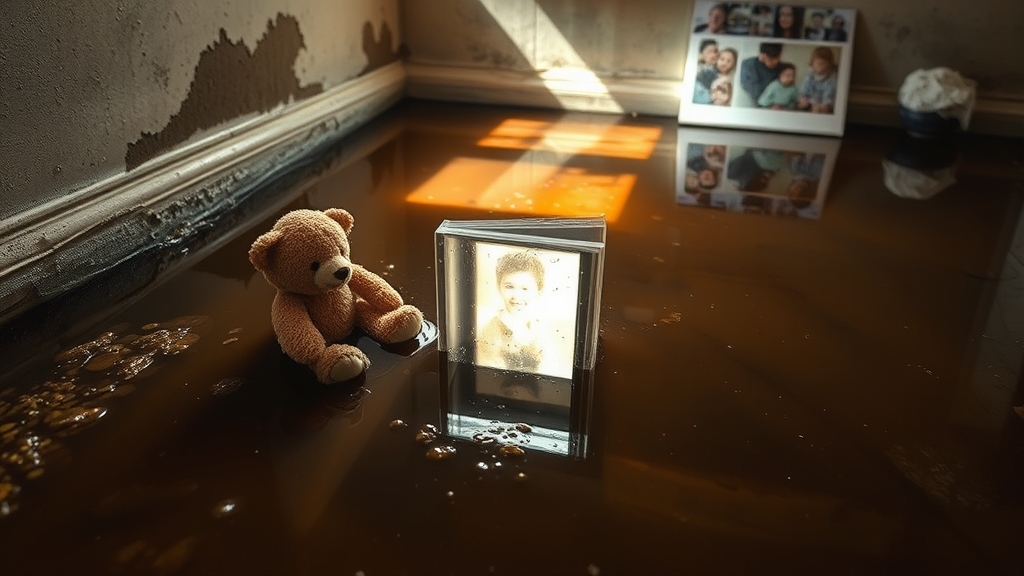
Sewage intrusion is more than a messy inconvenience; it is a serious health hazard demanding immediate action. Exposure can transmit pathogens including E. coli, hepatitis A, and norovirus, jeopardizing sewage health for everyone in the property. Airborne aerosols, skin contact, and contaminated surfaces increase risk quickly.
Immediate steps are essential: stop water use to limit flow, shut off electricity to affected zones if safe, and keep people and pets away.
Do not attempt deep cleanup without proper PPE; porous materials often require disposal. Document damage and call a 24/7 plumber to clear blockages, assess venting, and verify backflow prevention.
Professional remediation addresses disinfection, drying, and emergency sanitation standards. Prompt action reduces illness risk, prevents structural damage, and limits costly contamination spread.
No Running Water: What to Check Before You Call
Before calling a 24/7 plumber, the homeowner should verify the main shutoff valve is fully open.
Next, they should check with neighbors or the utility provider to rule out a broader service outage.
Finally, they should inspect individual fixture supply valves to guarantee they’re open and not blocked.
Verify Main Shutoff
First step: confirm the main water shutoff valve is fully open. Many no-water calls trace back to a partially closed valve after repairs or winterization.
A quick review of the plumbing checklist should include identifying the shutoff location—typically where the main line enters the home, near a water meter, crawlspace, or basement wall.
For a gate valve, turn counterclockwise until it stops; for a ball valve, align the handle with the pipe. Then test multiple fixtures.
- Relief when water returns after a single quarter-turn
- Frustration avoided by knowing the exact shutoff location
- Confidence from a clear, repeatable plumbing checklist
- Control regained by checking indoor and exterior valves
- Assurance that a plumber won’t be called unnecessarily
If valves are fully open and pressure is absent, document findings before the next steps.
Check Neighborhood Outage
Although a shutoff issue inside the home is common, the next quick check is whether the outage is neighborhood-wide. A resident can step outside, ask neighbors if their taps are dry, and quickly assess whether the problem involves neighborhood plumbing rather than a single property.
If multiple homes report no local water, the likely cause is a municipal interruption, main break, or scheduled maintenance.
Verification should include reviewing the water utility’s outage map or social media alerts, and calling the utility’s emergency line for status and estimated restoration. Observing utility crews on nearby streets also signals a system issue.
When the outage is widespread, contacting a 24/7 plumber is typically unnecessary; the utility is responsible. Note the time, conserve stored water, and monitor updates.
Inspect Supply Valves
Supply valves are the fastest checkpoint when taps run dry. A quick inspection can separate a simple fix from a true emergency.
Locate fixture shutoffs under sinks and behind toilets; verify they’re fully open by turning counterclockwise. Identify supply valve types—angle stop, straight stop, quarter‑turn ball, or multi‑turn compression—because each behaves differently when failing.
If a valve is stuck, do not force it; gentle back‑and‑forth motion may free mineral buildup. Evidence of leaks, corrosion, or heat damage signals immediate valve maintenance or replacement.
If all fixtures are affected, check the main shutoff at the meter or where the line enters the home.
- Relief in a simple twist
- Urgency when corrosion stings
- Doubt in a stubborn handle
- Confidence in clear labeling
- Calm through routine maintenance
Major Leaks and Active Flooding in Your Home
When water is pouring from a burst pipe, ceiling, or fixture, the situation demands immediate action and a 24/7 plumber. Major leaks escalate quickly, threatening structural components, electrical systems, and personal property. The priority is safety: shut off the main water valve, cut power to affected areas if safe, and move valuables out of harm’s way.
Professional leak detection pinpoints the source—behind walls, under slabs, or within supply lines—so repairs address the root cause, not just symptoms. A rapid emergency response limits mold growth, warping, and ceiling collapse.
Plumbers may isolate zones, install temporary caps, and pump standing water before completing permanent repairs. Until help arrives, contain flow with buckets, towels, and tarps, and avoid ceiling bulges or sagging drywall.
Gas and Water Heater Issues That Require 24/7 Service
Suddenly smelling gas near a water heater, seeing a burner that won’t ignite, or finding a leaking tank signals an emergency that warrants 24/7 service.
Gas leaks pose immediate explosion and health risks, while heater malfunctions can leave scalding hazards, carbon monoxide exposure, or severe water damage. Rapid response isolates fuel, vents dangerous gases, and prevents escalation.
- Fear of an unseen leak creeping into the home
- Anxiety as hot water vanishes during a cold night
- Worry over carbon monoxide endangering loved ones
- Shock at a tank rupture soaking floors and walls
- Relief when a pro restores safety before dawn
Professionals shut off gas, test lines, verify venting, assess ignition systems, and secure tanks.
Prompt action protects property, health, and peace of mind.
Problems That Can Wait Until Regular Business Hours
Minor issues that don’t threaten safety or cause active flooding can usually wait for standard hours.
Small fixture malfunctions—such as a dripping faucet, running toilet, or minor leaks at a shutoff valve—rarely justify an overnight call.
Small fixture issues—drips, running toilets, tiny valve leaks—rarely warrant an overnight service call.
Slow drains in a single sink or tub, when not backing up sewage, are typically non-urgent. Low but consistent water pressure across the home can also be scheduled, as can a toilet clog when another restroom is available.
Non-critical appliance concerns, like a dishwasher not filling or a washing machine drain odor without overflow, qualify for routine appointments.
Likewise, noisy but functioning water heaters, or a pilot light that relights and holds, seldom require 24/7 service.
If the situation remains contained and stable, daytime scheduling is appropriate.
Damage Control Steps to Take While Help Is on the Way
A few immediate actions can limit damage and make the scene safer while a plumber is en route. The goal is to stop water, protect property, and preserve evidence of the issue.
Shut off the fixture valve; if that fails, use the home’s main shutoff. Cut power to affected areas if water nears outlets. Place buckets and towels, and apply temporary fixes—plumber’s tape, epoxy putty, or a rubber patch with a clamp—from emergency kits kept on hand.
Open faucets to relieve pressure and avoid backups. Photograph damage for insurance and the plumber’s assessment.
- Stop the spread—control flow, control fear.
- Protect valuables—dry today, save tomorrow.
- Act with purpose—small steps, big relief.
- Use emergency kits—be ready, not sorry.
- Call sooner—minutes matter.
Frequently Asked Questions
How Much Does an Emergency Plumber Typically Cost After-Hours?
An emergency plumber typically costs $150–$400 per hour after-hours, plus a $75–$250 call-out fee. Emergency plumber rates vary by region, job complexity, and parts. Expect higher after hours pricing on weekends, holidays, and overnight service windows.
Will Homeowners Insurance Cover Emergency Plumbing Repairs?
Yes—home insurance may cover sudden, accidental water damage, not wear-and-tear or neglected maintenance. Plumbing coverage varies: burst pipes often covered; pipe repair itself sometimes excluded. Document damage, mitigate further loss, and confirm endorsements, deductibles, and limits with the insurer.
How Can I Choose a Trustworthy 24/7 Plumber Quickly?
They should search local listings, verify licenses and insurance, confirm plumber qualifications, and assess emergency response times. They compare reviews, request upfront pricing, ask about warranties, and choose companies with live dispatch, marked vehicles, background-checked technicians, and clear communication.
What Information Should I Provide When Calling an Emergency Plumber?
They should provide essential information: exact problem, water shutoff status, visible damage, location, access instructions, appliance type/age, recent work, photos if possible, contact details, and availability. This enables emergency plumbing triage, accurate pricing, proper parts, and faster dispatch.
Do Emergency Plumbers Service Apartments and Rental Properties?
Yes. Emergency plumbers typically service apartments and rental properties. They coordinate access, respect rental agreements, and communicate with tenants and landlords. Providers offer 24/7 emergency services for leaks, clogs, bursts, and backups, often requiring authorization and billing details before dispatch.
Final Thoughts
Plumbing emergencies can happen without warning — from burst pipes and sewage backups to gas leaks or complete loss of water. Recognizing when to act fast can make the difference between minor cleanup and major property damage. When active leaks, flooding, or health hazards arise, shut off your water, cut power if it’s safe, and call a licensed24/7 emergency plumber immediately.
AtDNA Honest Plumbing, we’re always ready to respond — day or night. Our certified team provides prompt, professional service forburst pipes,sewage backups,water heater leaks, and other urgent issues that threaten your safety or property. We arrive fully equipped to isolate damage, repair the source, and restore your system quickly and safely.
Need emergency plumbing help now? Call 586-257-1272 or visit ourContact Page for immediate assistance. Whether it’s a burst line, a sewage spill, or a sudden loss of water, DNA Honest Plumbing delivers 24/7 solutions Sterling Heights homeowners trust — because honesty flows through every pipe.