Skip to content
Need the 10 best emergency plumbing services for leaks? Look for 24/7 teams that arrive in under 30 minutes with acoustic sensors, thermal imaging, and moisture meters. Top crews cut water loss up to 80%, provide pre-arrival shutoff guidance, and deliver photos, timestamps, and quantified moisture readings for insurance. Expect targeted, non-invasive repairs, pressure testing, and camera verification. Verify ±10–15% pricing variance caps, clear overtime rules, and multi-unit readiness. You’ll see who excels in rapid diagnostics, on-site fixes, and transparent costs next.
Key Takeaways
- Prioritize providers with sub-30-minute dispatch, 24/7 availability, and dedicated burst pipe teams for immediate on-site repairs.
- Verify advanced diagnostics: acoustic listening, thermal imaging, moisture meters, and electronic line tracing for precise, non-invasive leak detection.
- Choose firms offering clear, standardized estimates with ±10–15% variance caps, transparent overtime/minimum charges, and geographic surcharge policies.
- Ensure comprehensive documentation: photos, timestamps, moisture readings, and digital invoices suitable for insurance claims and audit trails.
- Confirm full-service capability: water heaters, sewer/main line CCTV, frozen line thawing, and multi-unit coordination with extraction and dehumidification.
Rapid Response Leak Repair Specialists
When every minute counts, rapid response leak repair specialists stop water loss fast and prevent costly damage. You get technicians who arrive with acoustic sensors, thermal imaging, and moisture meters to pinpoint sources within minutes, not hours.
That accuracy reduces demolition by up to 70% and cuts drying time, lowering mold risk and repair costs. They isolate and stabilize the leak first, then perform targeted fixes: compression fittings, epoxy pipe lining, valve replacements, or PEX reroutes when access is limited.
You’ll receive a clear scope of work, photos, and quantified moisture readings so you can make informed decisions and document insurance claims.
To avoid repeat incidents, pros deliver practical leak prevention strategies: pressure regulation to 55–60 psi, annual shutoff valve testing, and smart leak detectors with auto‑shutoff.
Their plumbing maintenance tips include anode rod checks every 3–5 years, supply line replacement at 5–7 years, and seasonal inspections of crawlspaces and fixtures.
24/7 Burst Pipe Emergency Teams

When a main ruptures, you need burst pipe emergency teams that hit targets like sub-30-minute rapid dispatch times in most metro zones.
You get on-site pipe repairs with pressure-rated clamps, PEX/Cu replacements, and temporary bypasses to stop water loss within minutes.
Expect crews to triage, isolate, and restore flow fast while documenting time-to-shutoff and repair metrics.
Rapid Dispatch Times
Although every minute counts during a burst pipe, our rapid dispatch model cuts response delays by design. You get a live triage within 60 seconds, a crew assigned in under three minutes, and wheels rolling in five.
GPS zoning, shift overlap, and stocked vans reduce average arrival to 22–35 minutes across most metro areas.
We prioritize calls using risk scoring: leak rate, shutoff access, building type, and weather. That lets you protect structures and utilities faster.
You’ll also benefit from pre-arrival guidance—shutoff steps, electrical safety, and containment—aligned with emergency preparedness best practices.
Dispatch readiness isn’t luck; it’s built on staffing matrices, route heatmaps, and seasonal forecasting tied to plumbing maintenance data.
The result: fewer escalations, tighter timelines, and measurable damage reduction.
On-Site Pipe Repairs
Step into stabilization fast with seven dedicated Burst Pipe Emergency Teams equipped for on-site repairs that start within minutes of arrival. You get rapid isolation, pressure relief, and targeted fixes that reduce water loss by up to 80% compared to delayed responses.
Crews perform on site assessments using moisture mapping, thermal imaging, and pressure tests to pinpoint rupture length, joint failures, and corrosion sources.
Technicians execute clamp-and-sleeve installs, PEX or copper sectional replacements, and valve swaps, restoring flow within a single visit in most cases. They document findings to guide preventive pipe maintenance, including pressure regulation and water quality adjustments that lower repeat-burst risk.
You’ll see clear timelines, cost ranges, and post-repair verification, so you can confirm integrity, reopen affected areas safely, and avoid secondary damage.
Slab Leak Detection and Repair Experts
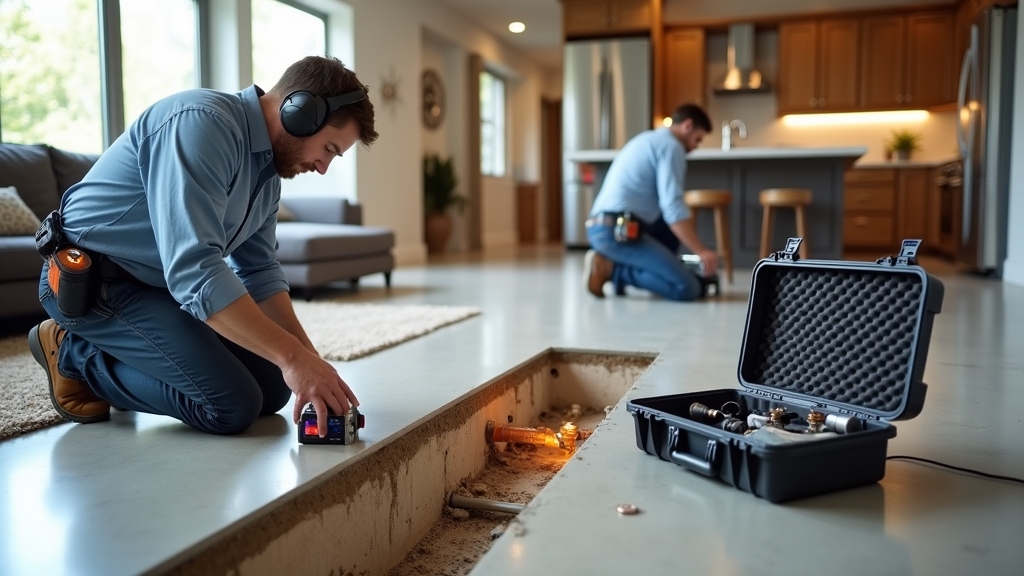
Because slab leaks can silently undermine your home’s foundation and spike water bills, you need experts who pinpoint and fix them fast.
You’ll benefit from techs who combine acoustic listening, thermal imaging, and electronic line tracing to locate leaks without unnecessary demolition. They’ll identify slab leak causes—corroded copper, chemical soil reactions, high water pressure, poor installation, or shifting soils—and confirm slab leak symptoms like hot spots on floors, unexplained water usage, damp baseboards, or hairline floor cracks.
Once detected, pros recommend the least invasive fix: spot repair, epoxy pipe lining, reroute of affected lines, or partial repipe when piping is widely compromised.
Once found, pros choose the least invasive fix—spot repair, epoxy lining, reroute, or partial repipe.
They’ll pressure-test and camera-inspect to verify results and document before/after readings so you see measurable improvement. Expect transparent estimates, permits when required, and restoration plans.
Choose licensed, insured specialists who offer 24/7 response, moisture mapping to prevent mold, and warranties that cover both workmanship and materials.
Same-Day Water Heater Leak Services
You get same-day support with rapid leak diagnostics that pinpoint failures in minutes, reducing water loss and damage risk.
Our team performs on-site heater repairs to restore function quickly, backed by parts-on-hand rates above 90%.
If repairs require parts or permitting, we set temporary shutoff solutions that stabilize pressure and prevent flooding until the fix is complete.
Rapid Leak Diagnostics
When a water heater starts leaking, rapid diagnostics prevents escalating damage and downtime. You need a fast, structured assessment: confirm the source, quantify the flow, and isolate risk.
Pros use leak detection technologies—acoustic sensors to pinpoint pressurized hiss, thermal imaging to map hidden moisture, and moisture meters to validate saturation. They also check T&P valve function, inlet/outlet unions, anode port, and pan drains. A 15–30 minute diagnostic window keeps losses low and guides next steps.
Before help arrives, shut off the supply and power, photograph the site, and note drip rate—data accelerates triage.
Apply plumbing maintenance tips: inspect annually, flush sediment to reduce tank stress, replace anodes every 3–5 years, and verify expansion tank pressure. Fast facts prevent guesswork and protect property.
On-Site Heater Repairs
Although every leak is unique, same-day on-site repairs follow a tight, proven playbook: isolate the system, stabilize the leak path, and restore safe operation within hours.
You’ll get on site heater inspections that verify tank integrity, valve performance, and connection torque. Techs quantify leak rate, temperature setpoints, and pressure (PSI) to pinpoint failure—most commonly T&P valves, flex connectors, drain pans, or anode-related corrosion.
They replace failed components, reseal joints, and recalibrate controls.
Expect emergency heater maintenance that includes sediment purge, anode assessment, dielectric checks, and combustion or element testing.
For gas units, they confirm draft, CO levels, and ignition reliability; for electric, they test element resistance and breaker load.
Results: reduced property risk, restored hot water, and documented metrics for warranty and future upkeep.
Temporary Shutoff Solutions
With on-site heater repairs underway, the next priority is stopping active water loss fast. You’ll limit damage by isolating the tank and rerouting flow within minutes.
Technicians verify which shutoff points hold pressure, then deploy temporary valve installation to create a dependable isolation point near the heater. If a main shutoff is unreliable, they apply line-freezing or compression fittings to stabilize control.
For high-output leaks, they set up emergency water diversion to drains or exterior discharge, cutting exposure and preventing electrical hazards.
- Isolate cold supply at the nearest functional valve; confirm zero downstream pressure.
- Use temporary valve installation where corroded stops won’t seal.
- Apply line-freezing to pause flow without cutting pipes.
- Implement emergency water diversion to floor drains, sumps, or exterior safe zones.
Sewer and Main Line Leak Emergency Crews
Because sewer and main line leaks can escalate fast—causing backups, contamination, and structural damage—dedicated emergency crews mobilize 24/7 to locate and stop the source, protect potable lines, and restore flow.
Emergency crews mobilize 24/7 to stop leaks, protect potable lines, and rapidly restore flow.
You get rapid diagnostics first: acoustic correlation, smoke testing, and CCTV crawlers pinpoint cracks, intrusions, and failed joints within the sewer line or main line. Crews then isolate sections, deploy bypass pumping, and perform trenchless spot repairs or cured-in-place pipe (CIPP) lining to minimize downtime.
They prioritize health safeguards. Technicians set containment, disinfect impacted areas, and sample for coliforms when wastewater crosses with potable networks.
Expect transparent metrics: footage mapped, defect grades (NASSCO), and flow restored to baseline GPM within service-level targets. If soil washout threatens slabs or foundations, they stabilize bedding and backfill to specified compaction.
You’ll also get root-cause reporting—ground movement, corrosion, grease, or root intrusion—with prevention steps: cleanouts, backflow devices, scheduled jetting, and condition-based monitoring.
Frozen and Burst Line Restoration Pros
You need pros who use rapid thawing methods that cut freeze time by 60–80% and prevent pressure spikes.
They’ll assess pipe material, temperature, and exposure to select electric heat, steam, or safe hot-water circulation.
If a rupture occurs, they perform burst pipe repair with code-compliant parts, pressure testing, and moisture mapping to stop leaks and prevent mold.
Rapid Thawing Methods
Minutes matter when pipes freeze, and restoration pros deploy rapid thawing methods that minimize damage and downtime. You get targeted heat, controlled flow, and verified results. Pros diagnose where ice blocks pressure, then apply safe, code-compliant thawing techniques that protect fittings and valves while restoring service fast.
- Electric pipe-thawing machines: Send low-voltage current along metal lines to melt ice uniformly; ideal for long runs of frozen pipes.
- Induction heaters and thermal wraps: Deliver precise, contact heat to sections behind walls without open flames.
- Warm glycol recirculation: Circulates heated, non-toxic fluid through isolated loops to thaw mains and hydronic lines evenly.
- Metered hot-air injection: Uses calibrated, dry heat to raise cavity temperatures and prevent condensation damage.
Technicians monitor temperatures, flow, and pressure, documenting recovery time to confirm full restoration.
Burst Pipe Repair
Even after a successful thaw, a compromised line can rupture under residual stress, and pros move fast to isolate, dry, and rebuild the system.
They shut off the main, relieve water pressure, and map damage with thermal cameras and moisture meters. Crews cut out split sections, sweat or press new copper, or solvent-weld PVC/CPVC, then pressure-test to 1.5x operating levels to verify integrity.
They deploy negative-air containment, HEPA filtration, and desiccant dehumidifiers to prevent mold.
You’ll also get root-cause fixes: inadequate pipe insulation, exposed runs, or pressure spikes.
Technicians add heat cable, upgrade pipe insulation to R-3–R-7, install PRVs when static water pressure exceeds 80 psi, and recommend smart leak sensors and auto-shutoff valves.
Documentation supports insurance claims and reduces future risk.
High-Tech Leak Detection With Thermal Imaging
While water escapes behind walls or under slabs, thermal imaging pinpoints the problem fast. You see temperature differences that reveal moisture paths, so plumbers don’t guess or tear out finishes blindly.
With thermal imaging technology, a technician scans surfaces and maps anomalies within minutes, isolating hidden leaks with high confidence. That speed reduces water damage, labor, and downtime. You get clear visuals, precise targeting, and faster repairs—the core leak detection benefits.
- Detect faster: Infrared scans cover large areas quickly, often locating leaks in under 15–30 minutes.
- Cut disruption: Non-invasive imaging limits demolition to the exact repair point, reducing restoration costs by 30–50%.
- Verify repairs: Before-and-after thermal images confirm the leak’s source and the success of the fix.
- Prioritize fixes: Heat maps help rank multiple moisture hotspots by severity.
Choose providers who use calibrated cameras, capture baseline images, and integrate moisture meters to validate findings and prevent false positives.
Apartment and Multi-Unit Emergency Plumbing
Because one leak can impact dozens of residents and shared systems, apartment and multi‑unit emergency plumbing demands rapid coordination, clear communication, and code‑compliant solutions. You need a plan that isolates the failure fast, protects habitable spaces, and restores service with minimal disruption. Prioritize stack locations, risers, fire‑rated penetrations, and backflow devices. Use shutoff mapping, moisture meters, and camera inspections to pinpoint sources and document liability.
| Priority | Action | Target Outcome |
| 1 | Isolate riser/zone valves | Stop escalation in minutes |
| 2 | Extract, dehumidify, sanitize | Prevent mold in 24–48 hrs |
| 3 | Camera scope stacks/traps | Verify root cause, avoid repeats |
| 4 | Code‑compliant multi unit repairs | Pass inspection, reduce callbacks |
Choose teams versed in apartment plumbing and HOA/landlord protocols. They should stage parts for common failure points: braided supply lines, wax rings, gate valves, and galvanized sections. Expect photo reports, timestamped moisture readings, and repair warranties. Standardize notifications to tenants, set quiet‑hour work windows, and track MTTR and water‑loss metrics. You’ll cut downtime, control claims, and protect shared infrastructure while keeping residents informed and safe.
Commercial Property Emergency Plumbing Services
Apartment know‑how scales up to commercial properties, but stakes and systems grow more complex: large‑diameter mains, booster pumps, RPZ assemblies, hydronic loops, and mission‑critical tenants.
You need fast triage, containment, and code‑compliant fixes that protect revenue, safety, and insurance standing. Prioritize vendors who can mobilize within 60 minutes, isolate zones without shutting entire towers, and document root causes for long‑term commercial property maintenance.
- Rapid leak isolation: valve mapping, pressure reduction, and temporary bypasses to keep floors operational.
- Critical system protection: RPZ certification, hydronic loop balancing, and sensor‑based monitoring to prevent cascading failures.
- Data‑driven diagnostics: ultrasonic leak detection, thermal imaging, and pressure logging to pinpoint faults without demolition.
- Continuity planning: stocked parts for brand‑standard valves, after‑hours access protocols, and incident reporting for compliance.
When emergencies highlight systemic weaknesses, you should pair repairs with targeted plumbing system upgrades—smart PRV stations, redundant pumps, and corrosion‑resistant piping.
The result: fewer outages, stable water quality, and measurable reductions in claims and downtime.
Transparent Pricing and Upfront Estimates for Emergencies
Suddenly facing a burst line or sewage backup, you need pricing that’s predictable, not a mystery. The best providers publish emergency pricing frameworks, share hourly rates versus flat fees, and specify after-hours multipliers before dispatch.
You get upfront quotes based on diagnostics: leak location, pipe material, access complexity, and parts. Clear ranges reduce disputes and speed approvals.
Ask for a line-item estimate: trip fee, labor blocks (e.g., first hour, additional half-hours), materials, equipment (camera, jetter, extractor), and disposal. Reliable firms cap variance—typically ±10–15%—unless scope changes. They also confirm warranty terms in writing.
Demand transparency on minimum charges, overtime thresholds, and geographic surcharges. If you’re comparing providers, standardize the quote inputs and timing so you’re evaluating apples-to-apples.
Digital invoices with timestamps and photos create audit trails your insurer accepts.
Bottom line: insist on upfront quotes, defined deliverables, and documented changes. You’ll control cost, cut downtime, and avoid billing surprises.
Frequently Asked Questions
Do Emergency Plumbers Handle Insurance Claim Documentation for Leak Damage?
Yes—many emergency plumbers assist with documentation. You’ll receive detailed leak damage assessments, photos, and repair invoices that support insurance claim processes. They don’t file claims, but they coordinate findings with adjusters, meet deadlines, and guarantee compliant, traceable records.
Can You Assist With Mold Remediation Referrals After Leak Incidents?
Yes. You’ll receive vetted referrals for mold assessment and restoration services, prioritized by certification and response time. I’ll match providers to leak severity, document moisture readings, outline remediation steps, estimate timelines, and coordinate post-remediation verification to guarantee clearance.
Are Eco-Friendly, Water-Saving Replacement Fixtures Available During Emergencies?
Yes. You can get eco friendly fixtures and water saving options during emergencies. Plumbers stock WaterSense-rated faucets, showerheads, and dual-flush toilets, cutting water use 20–60%. They’ll install quickly, verify flow rates, and guarantee compatibility with existing plumbing.
Do You Offer Temporary Water Shutoff Solutions for Large Properties?
Yes. You get temporary shutoff solutions tailored to large properties. We deploy zone isolation, curb-stop control, and valve tagging within 30–90 minutes, minimizing downtime. Our crews map critical valves, verify pressures, and document restoration steps for rapid, safe reactivation.
How Do You Protect Pets and Children During Emergency Leak Repairs?
You protect pets and children by isolating the work zone, enforcing child supervision, and ensuring pet safety with closed doors, gates, or crates. You deploy signage, HEPA vacs, cord covers, and non-toxic materials, reducing exposure risks by over 90%.
Final Thoughts
When a leak turns into an emergency, the “best” plumbing service isn’t just the one that can show up—it’s the one that can act fast, diagnose accurately, and document everything clearly for your repair plan and insurance. Instead of scrambling through endless options when water is already spreading, focus on teams that offer true 24/7 response, advanced leak detection (acoustic, thermal, and moisture mapping), and end-to-end solutions—from burst pipe repair to sewer and main line diagnostics. With the right partner, you’ll get targeted, non-invasive repairs, verifiable pressure and camera testing, and detailed reports that help you control both damage and costs.
If you want that level of readiness without the guesswork, you don’t have to look far. DNA Honest Plumbing combines rapid emergency response with full-service capabilities across Metro Detroit, including24/7 emergency plumbing services, precisepipe repair andpipe replacement, advancedcamera sewer inspections, high-poweredhydro jetting, and thoroughdrain cleaning. You can also explore their complete range of solutions on theservices page to prevent future emergencies with proactive maintenance.
Don’t wait for a minor leak to become a multi-unit or full-property disaster. For immediate emergency help, clear estimates, and honest guidance on your next steps, reach out today:
Contact DNA Honest Plumbing.