Skip to content
Need the best emergency plumbing for leaks? Look for 24/7 rapid-response teams that dispatch the nearest certified tech, give precise ETAs, and arrive with well‑stocked vans for one‑trip fixes. Expect advanced leak detection (acoustic, thermal, pressure testing), slab‑leak pinpointing, prioritized shutoffs, and eco‑safe repairs. Demand transparent, itemized pricing and real-person support on the first ring. You’ll also want photo‑backed reports and insurer coordination for smooth claims. Citywide coverage and rural reach seal the deal—here’s how to spot the top ten.
Key Highlights of Our 24/7 Emergency Leak Detection & Repair ServicesKey Takeaways
- 24/7 rapid dispatch with live ETAs and nearest qualified technician routing for burst and hidden leaks.
- Advanced leak detection: acoustic correlation, thermal imaging, tracer gas, and calibrated pressure decay testing.
- Smart repair options: targeted reroutes, keyhole slab penetrations, epoxy lining, and pressure-balanced post-repair verification.
- Transparent, upfront pricing with itemized estimates, written approvals, and clear after-hours multipliers and warranties.
- Insurance-ready documentation: timestamps, photos, mapped zones, pressure-test reports, and direct insurer coordination for claims.
1. 24/7 Rapid Response Leak Specialists
When a pipe bursts or a joint starts weeping at 2 a.m., you need leak specialists who show up fast, diagnose precisely, and stop the water at the source.
You’re not gambling on luck—you’re selecting seven rapid response teams that treat minutes like currency and pressure like data. You expect live dispatch, route optimization, and arrival estimates you can trust.
Each specialist brings calibrated acoustic listening, thermal imaging, and pressure testing to isolate failure points without tearing up finishes.
You get clear triage, prioritized shutoffs, and targeted repairs that minimize downtime and damage.
You also want firms that invest in staff wellness, because rested pros think sharper under stress.
You also want firms that are engaged in community outreach, because accountability off the clock predicts integrity on-site. Choose seven with those traits.
2. Certified Technicians for Burst and Hidden Leaks
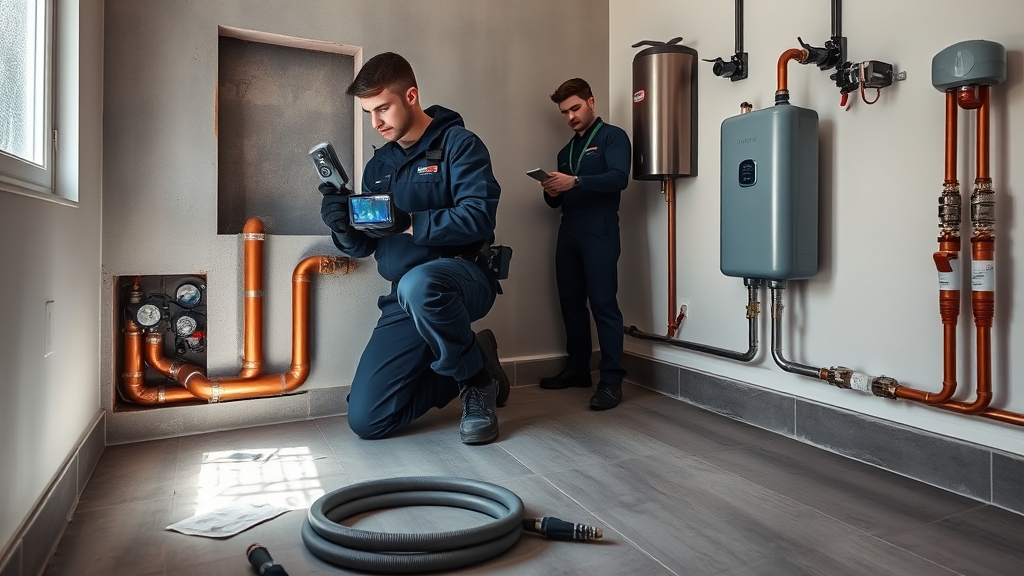
You need certified technicians who deliver rapid leak diagnostics before damage spreads.
They use advanced tools to pinpoint burst lines and hidden seepage fast.
With licensed emergency response, you get code-compliant repairs and immediate peace of mind.
Rapid Leak Diagnostics
Although leaks can escalate fast, rapid diagnostics by our certified technicians pinpoints burst and hidden leaks before they cause major damage.
You get a disciplined process: isolate zones, stabilize pressure, and verify sources with noninvasive tools.
We deploy acoustic correlation, thermal imaging, and tracer gas to triangulate anomalies within minutes, not hours.
Our mastery comes from workflow optimization and rigorous training protocols.
Techs interpret signal noise, distinguish slab seepage from supply-line fractures, and rank repair urgency by flow rate and material risk.
You receive a clear, time-stamped report: location, cause hypothesis, confidence level, and recommended fix path.
We don’t guess.
We measure, compare, and confirm, then hand you decisive data to prevent structural degradation, mold proliferation, and recurring leak cycles.
Licensed Emergency Response
Even under chaotic conditions, our licensed emergency response team mobilizes fast and fixes with authority.
You get certified technicians who isolate burst and hidden leaks, stabilize pressure, and protect structural elements before secondary damage compounds.
We document conditions, photograph evidence, and map affected zones, creating a defensible record that minimizes legal liability and accelerates claims.
You also avoid compliance traps.
We verify permit requirements in real time, pull emergency permits when needed, and coordinate inspections so your repair path stays lawful and uninterrupted.
Our techs follow manufacturer specs, pressure-test assemblies, and deliver written results you can trust.
We brief you on shutoff hierarchies, containment priorities, and post-repair monitoring, then hand off a clear remediation plan.
Precision, speed, and accountability—executed without shortcuts.
3.Transparent, Upfront Pricing Without Upsells
Often the biggest relief in a plumbing emergency is knowing the price before work starts. You deserve transparent, upfront pricing anchored to flat rates and disciplined scope control.
Demand itemized estimates that break down labor, materials, disposal, and permits, so you can assess value, not sales theatrics. Ask for written authorization thresholds: no extra work proceeds without your sign-off.
Assert diagnostic clarity. A pro states the root cause, outlines options, and prices each path before touching a wrench.
Insist on no “tripwire” fees or mystery surcharges. Verify time windows, after-hours multipliers, and warranties in writing.
You’re not buying guesswork—you’re purchasing defined outcomes. With rigorous pricing, you can compare providers apples-to-apples, eliminate upsells, and lock costs to the agreed scope.
4. Same-Day Service With Well-Stocked Vans
With pricing locked in, speed and readiness become the next test.
You want same-day service that actually solves the leak on the first visit.
That requires disciplined inventory management and vans stocked with the parts you’re most likely to need—pipe sizes, valves, supply lines, solvent, and repair fittings—selected from data, not guesswork.
Your dispatcher should use route optimization to position the nearest qualified tech, trimming drive time and downtime.
When the plumber arrives, they shouldn’t leave to “grab a part.” They’ve got it.
Efficient layout, labeled bins, and real-time replenishment keep the van surgical—less searching, faster repairs.
You get a tight arrival window, status updates, and a one-trip fix.
Same-day should mean same-resolution, not a promise that pushes work to tomorrow.
5. Advanced Leak Detection and Diagnosis
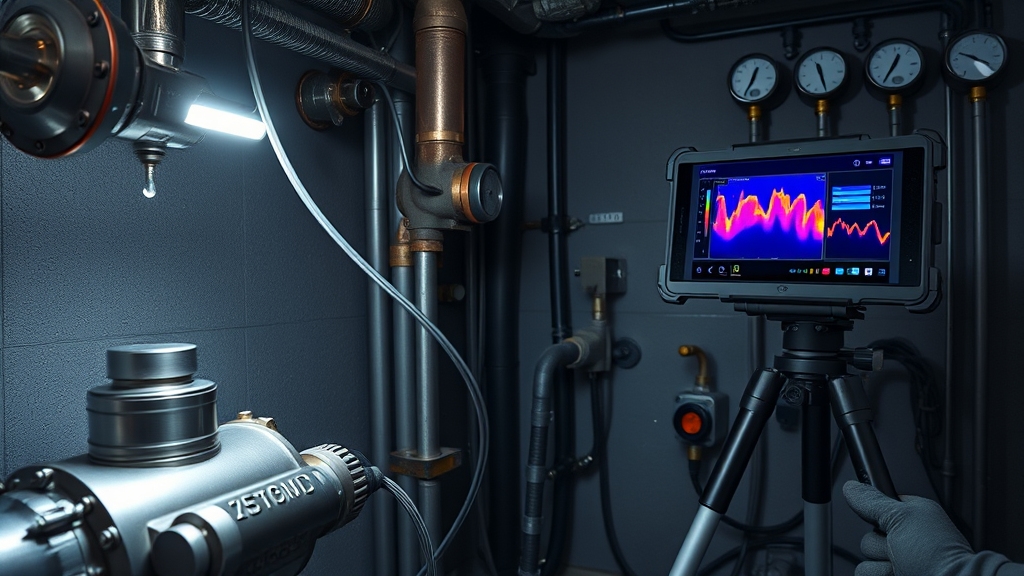
When a hidden leak threatens your home, you need tools that pinpoint problems fast.
You’ll benefit from acoustic leak pinpointing to locate sounds behind walls, thermal imaging assessments to spot temperature anomalies, and pressure decay testing to confirm system integrity. These methods help you stop water loss quickly and prevent costly damage.
Acoustic Leak Pinpointing
How do you find a hidden leak without tearing into walls or slabs? You listen with precision. Acoustic leak pinpointing uses calibrated microphones and strategic hydrophone placement to isolate turbulence signatures in pressurized lines. You’ll sweep the grid, log decibel shifts, and apply frequency mapping to separate pipe-borne noise from structural chatter. Then you triangulate—validating the loudest node against pressure and valve tests—to mark a cut point within inches.
- Use soft pads to decouple sensors from flooring.
- Normalize readings at consistent system pressure.
- Record at multiple gain levels to avoid clipping.
| Technique | Purpose |
| Frequency mapping | Distinguish leak tones from ambient noise |
| Hydrophone placement | Capture in-line acoustic energy |
| Cross-correlation | Triangulate source location efficiently |
With disciplined passes, you’ll reduce exploratory demolition and accelerate repairs.
Thermal Imaging Assessments
Acoustic tools give you the leak’s voice; thermal imaging shows you its heat signature.
You’ll see temperature anomalies map moisture paths behind tile, slab, and drywall without cutting.
By contrasting surface deltas in real time, you can separate active leaks from old stains and pinpoint the origin, not just the symptom.
Use calibrated infrared cameras, adjust emissivity for plumbing substrates, and normalize readings with reference panels to avoid false positives.
Cross-check patterns near fixtures, radiant heating loops, and chase walls.
You can integrate findings into Energy audits, since wet insulation skews envelope performance, and flag Electrical hotspots that may coincide with moisture-risk zones.
Document time-stamped thermograms, annotate thermal gradients, and prioritize repairs where heat signatures converge with visible wicking or corrosion markers.
Pressure Decay Testing
Pressurizing a closed plumbing zone and watching the gauge fall tells you if the system’s holding or bleeding. You verify integrity by stabilizing temperature, isolating sections, and logging pressure over time. A clean decay curve, paired with precise Test Calibration, separates micro-seepage from instrument noise. You’ll confirm Standards Compliance by matching medium, pressure, and duration to code and manufacturer specs, then documenting traceable results.
| Step | Action | Why it matters |
| 1 | Isolate zone | Prevents cross-feed masking leaks |
| 2 | Calibrate gauge | Eliminates false positives/negatives |
| 3 | Pressurize, stabilize | Normalizes temperature/elastic effects |
| 4 | Record decay | Quantifies leak rate, supports reports |
Interpretation’s key: linear loss suggests active leakage; asymptotic curves often reflect material relaxation. Correlate data with valve positions and fixtures to pinpoint the fault.
6. Emergency Repairs for Water Heaters and Tanks
When a water heater or storage tank fails without warning, swift action prevents damage and restores hot water fast.
When your water heater fails unexpectedly, swift action minimizes damage and restores hot water fast.
You isolate power or gas, close the inlet, and call an emergency tech to stabilize, diagnose, and repair.
Rapid control of thermal expansion and pressure stops escalation, while targeted fixes protect the tank’s integrity and your fixtures.
- Shutoff strategy: locate and close cold-inlet and gas/electric supply; verify no backflow.
- Leak triage: assess T&P valve, unions, drain valve, and seams; deploy pans and pumps.
- Sediment flushing: purge scale to recover capacity, efficiency, and quiet operation.
- Anode replacement: install the correct alloy and length to arrest corrosion.
Pros then reset controls, test combustion or elements, and document recovery pressures and temperatures.
7. Slab Leak Experts With Non-Invasive Solutions
A hidden leak under your slab can erode soil, spike bills, and crack finishes, but specialists now pinpoint and fix them without tearing up your home.
You’ll benefit from acoustic correlation, thermal imaging, and tracer-gas diagnostics that isolate leaks within inches, protecting finishes and prioritizing foundation preservation.
Instead of trenching, pros reroute targeted sections, apply epoxy lining, or perform keyhole slab penetrations guided by mapping.
Expect pressure-balanced testing to confirm repairs and verify system integrity post-fix.
Technicians select eco friendly materials—low-VOC epoxies, lead-free solders, and water-safe sealants—to reduce indoor toxins and safeguard groundwater.
Smart sequencing minimizes downtime: isolate, depressurize, repair, re-pressurize, validate.
You regain stable water pressure, drier soils, and a resilient structure—without sacrificing aesthetics or accepting avoidable structural risk.
8. Insurance-Friendly Documentation and Support
When emergencies hit, you need paperwork that your insurer accepts without pushback.
We provide detailed repair reports with clear photo and video evidence to document damage and fixes.
If you’d like, we’ll coordinate directly with your insurer to speed approvals and reduce your stress.
Detailed Repair Reports
Clear, insurance-ready repair reports save you time, stress, and out-of-pocket costs after a plumbing emergency.
You need reports that align with insurer standards and tell a precise story: what failed, why, how it was fixed, and what prevention steps follow.
Ask your plumber to produce a structured document that maps every repair action to codes, warranty terms, and compliance checklists, so adjusters can approve claims without delays.
- Scope summary: affected fixtures, materials, and the exact failure mode, timestamped and categorized.
- Root-cause analysis tied to manufacturer specs and code references to justify remediation.
- Itemized labor, parts, and timelines with start/finish markers to validate claim amounts.
- Post-repair verification: pressure tests, leak-down data, and next-step maintenance recommendations.
With disciplined reporting, you’ll secure faster payouts and stronger records.
Photo and Video Evidence
Why do insurers greenlight some claims faster than others? Because your visual proof is decisive.
Capture wide shots to establish context, then close-ups of the leak source, damaged materials, and shutoff points. Record short video sequences that show water movement and measurable spread. Use a device with reliable timestamp verification and make sure GPS is enabled.
Stabilize your shots, include a ruler or moisture meter for scale, and narrate key details—location, time, and conditions. Don’t edit originals; preserve the first capture to maintain chain-of-custody.
Export duplicates for sharing but keep raw files intact for metadata preservation. Name files systematically (address-room-date). Back up to two locations—local and cloud. Finally, log each asset in a simple index so adjusters can trace evidence without friction.
Direct Insurer Coordination
With your photo and video evidence in hand, coordinate directly with your insurer to keep the claim moving.
Open a claim immediately, request a written claim number, and ask for coverage clarification in writing.
Share timestamps, repair invoices, and plumber statements that link the leak to the damage.
Keep communications documented and concise so adjusters can verify scope without delay.
When adjusters call, confirm next steps, reserve rights, and timelines.
- Provide a damage matrix: rooms, materials, square footage, and moisture readings.
- Ask for policy citations regarding exclusions, depreciation, and code upgrades.
- Schedule joint inspections with your licensed plumber for technical validation.
- Prepare for settlement negotiations with comparable repair estimates and mitigation logs.
You’ll reduce disputes, compress cycle time, and secure an accurate payout.
9. Citywide Coverage and Rural Reach
From downtown high-rises to the last mile of country roads, our emergency plumbers reach you fast.
You get standardized response windows mapped by regional scheduling, so crews deploy from the closest stocked hub, not a distant base.
Standardized response windows, regional scheduling, nearest stocked hubs—not distant bases—for faster crew deployment.
Urban cores benefit from micro-zoned routing during peak traffic; rural routes leverage 4×4 vehicles and spare-part caches staged near watershed risk points.
We integrate GIS data, road conditions, and historical leak patterns to prioritize dispatch without guesswork.
If a storm reroutes access, we dynamically reassign technicians to maintain continuity of coverage.
Through targeted community outreach, we pre-identify shutoff locations, well systems, and septic interfaces, cutting diagnostic time on arrival.
You get equal speed and capability, whether you’re beneath skyline cranes or past the grain silos.
10. Customer Service That Answers on the First Ring
Even at midnight, you reach a real person on the first ring—no phone trees, no holds.
You get immediate triage, precise ETA, and decisive next steps.
Friendly greetings set a professional tone, and Multilingual support removes friction so you can describe the issue once, clearly.
The agent confirms shutoff locations, prioritizes safety, and dispatches the right specialist without delay.
- Rapid verification: address, leak type, water status, and photos for instant assessment.
- Smart routing: nearest licensed tech with the right parts and tools, not just the closest van.
- Transparent cadence: texted ETA, live map tracking, and pre-arrival prep checklist.
- Post-call follow-through: digital work order, warranty terms, and escalation path.
You control the timeline, prevent damage, and guarantee accountability from the first hello.
Frequently Asked Questions
Do You Offer Preventive Maintenance Plans to Reduce Future Leak Risks?
Yes—we offer thorough preventive maintenance plans. You schedule inspections and seasonal tuneups, we benchmark system performance, document vulnerabilities, replace fatigued components, calibrate pressures, and validate shutoffs. You’ll reduce leak risks, extend fixture lifespans, and maintain code-grade reliability year-round.
What Warranties or Guarantees Cover Your Emergency Leak Repairs?
You’re covered by a 12‑month Labor Warranty and a manufacturer-backed Parts Guarantee. You’ll get written documentation, clear exclusions, and transferability details. We also include post-repair pressure testing and a 30‑day workmanship check to validate performance under load.
Can You Advise on Water Damage Restoration After Leak Containment?
Prioritize rapid extraction, Structural Drying, and Mold Remediation. Document damage, isolate affected zones, remove unsalvageables, then deploy dehumidifiers, air movers, and HEPA filtration. Validate moisture with meters, monitor daily, and decontaminate. Finish with odor control, rebuild plans, and insurer coordination.
How Do You Handle Plumbing Code Compliance and Required Permits?
You verify compliance by mapping scope to code sections, handling permit acquisition, and scheduling inspection coordination. You document materials, as-builts, and pressure tests, maintain change logs, and brief inspectors, verifying corrections close promptly and final approvals certify occupancy and warranty.
Do You Provide Eco-Friendly Options for Fixtures and Pipe Materials?
Yes. You can choose low flow fixtures, WaterSense toilets, aerated showerheads, and smart faucets. You’ll also spec recycled piping options like PEX with recycled content or HDPE. I’ll quantify savings, verify certifications, and optimize lifecycle performance.
Final Thoughts
When leaks happen, you don’t just need a plumber — you need a 24/7 emergency partner who responds fast, diagnoses accurately, and documents every step for your peace of mind. AtDNA Honest Plumbing, we combine rapid dispatch, advanced leak detection, and honest pricing to stop water damage before it spreads.
Our licensed experts handle everything fromburst pipe repair and slab leak detection towater heater emergencies,sump pump installation, and fullpipe replacement. You’ll get real-time ETAs, photo-backed insurance reports, and itemized quotes—no surprise fees, no hidden markups.
We also specialize in prevention: winterization and frozen pipe protection,drain cleaning, water filtration upgrades, and plumbing maintenance plans that keep your system leak-free year-round.
Call 586-257-1272 now for 24/7 emergency plumbing service in Sterling Heights, Macomb County, and the Greater Metro Detroit area, or visit ourContact Page to schedule immediate help.
DNA Honest Plumbing — Fast. Fair. Reliable. When it comes to leaks, we find them, fix them, and finish them right — the first time.